

Music & WellnessHarnessing the Healing Power of Music for Holistic Well-Being
Wellness, Technology & Emerging • Certificate Program
A three-month immersive program exploring the profound connections between music, neuroscience, and human health.
The Music & Wellness Certificate at The Global Conservatory bridges the gap between the ancient intuition that music heals and the modern science that proves it. Over twelve weeks, you will explore how sound affects the brain and body, learn evidence-based wellness practices rooted in music, and develop the skills to design transformative programs for diverse populations.
Whether you are a musician seeking a new purpose for your art, a wellness professional looking to add music-based modalities, or anyone drawn to the intersection of sound and health, this program provides the knowledge, tools, and community to turn that passion into meaningful practice. Delivered entirely online with guided experiential sessions.
Our Belief
For thousands of years, every civilization on earth has known that music heals. Shamans chanted, monks intoned, and mothers sang lullabies long before science could explain why these practices work.
Today, neuroscience reveals what the ancients understood intuitively: music activates neural networks across the entire brain, regulates stress hormones, releases dopamine, and synchronizes biological rhythms in ways no other stimulus can replicate.
This program stands at the intersection of ancient wisdom and modern research, preparing you to harness the full healing potential of music for yourself and the communities you serve.
Three Core Tracks
Focus Areas
Each track provides deep immersion in a critical dimension of music and wellness, blending scientific understanding with practical application and personal experience.
Neuroscience of Music
Understand how music interacts with the brain at a fundamental level. Explore the neural mechanisms behind emotional response, memory formation, and the stress-reduction pathways that make music a uniquely powerful wellness tool.
- Brain-music connection and neural activation
- Stress response and cortisol regulation
- Neuroplasticity through musical engagement
- Emotional regulation and dopamine pathways
Wellness Practices
Experience and learn to facilitate a wide range of music-based wellness modalities. From sound baths and mindful listening to breathwork with music, you will build a practical toolkit of evidence-informed techniques.
- Sound baths and immersive listening
- Mindful listening and music meditation
- Breathwork synchronized with music
- Music journaling and reflective practice
Program Design
Learn to design, deliver, and evaluate music-based wellness programs for diverse settings. From corporate wellness initiatives to community programs and personal practice frameworks, you will graduate ready to serve real populations.
- Corporate and workplace wellness workshops
- Community and senior living programs
- Educational and youth wellness settings
- Personal practice and retreat design
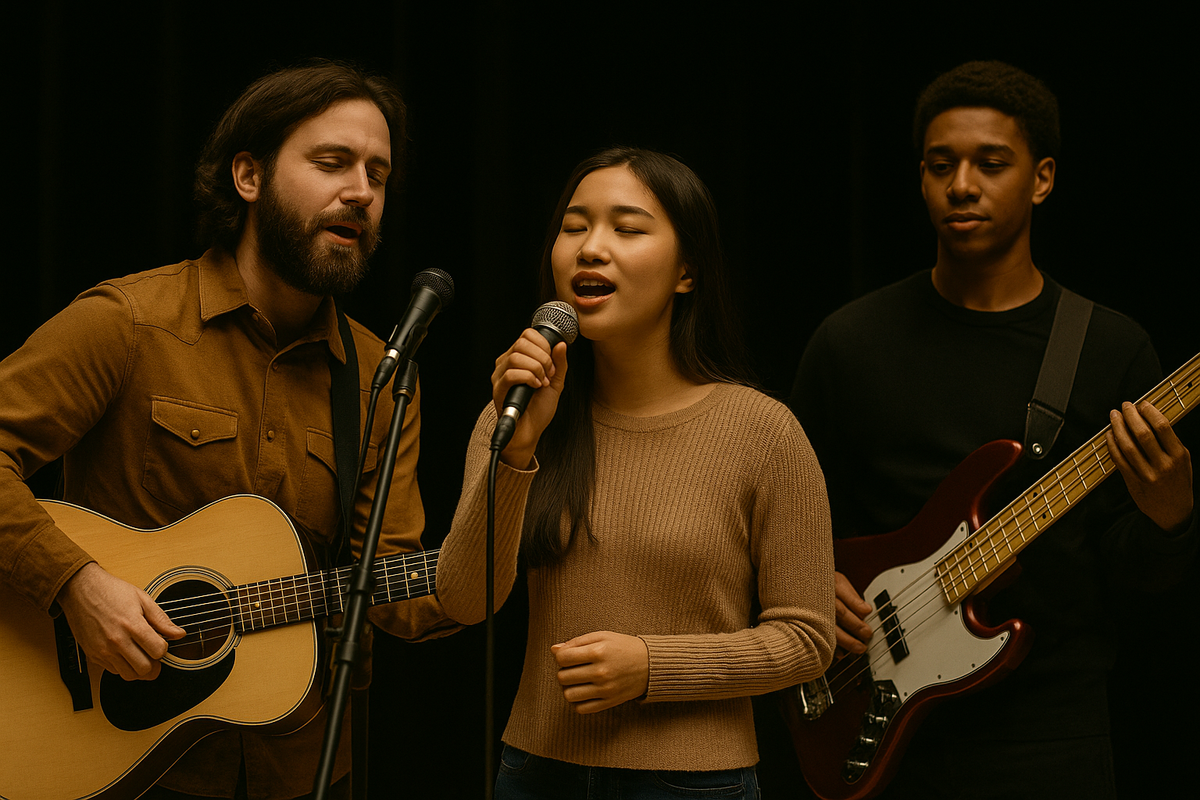
The Science
Music & the Brain
When you listen to music, your brain does not simply process sound. It activates a vast network of neural regions simultaneously: auditory cortex, motor areas, limbic system, prefrontal cortex, and reward centers. No other human activity engages the brain so comprehensively.
- How music activates neural networks across both hemispheres simultaneously
- The dopamine response: why music creates pleasure, motivation, and emotional peaks
- Music and memory: how rhythm and melody serve as mnemonic scaffolding for recall
- Motor coordination and entrainment: the body's involuntary synchronization with rhythm
- Cortisol reduction: the measurable stress-lowering effects of specific musical elements
Understanding the neuroscience is not about reducing music to chemicals. It is about appreciating, with scientific rigor, what musicians have always felt.
The Modalities
Sound Healing Practices
Sound healing encompasses a diverse range of practices, each with its own history, methodology, and evidence base. This module introduces the major modalities and teaches you to facilitate basic sessions safely and effectively, while understanding the science behind each approach.
- Singing bowls: Tibetan and crystal bowls, resonance, and vibrational entrainment
- Tuning forks: frequency-specific applications for relaxation and energy balance
- Gongs: immersive sound bath facilitation and the therapeutic power of overtones
- Binaural beats: brainwave entrainment, alpha and theta states, and digital applications
- Nature sounds and overtone singing: environmental acoustics and vocal harmonics
Each modality offers a distinct pathway to relaxation and well-being. Your task is to learn them, experience them, and discover which resonate most deeply with your practice.

The Lineage
Pioneers & Visionaries
You study in a tradition shaped by the researchers, authors, and practitioners who have illuminated the profound connections between music, the brain, and human wellness.
"Music can lift us out of depression or move us to tears. It is a remedy, a tonic, orange juice for the ear."-- Oliver Sacks
Oliver Sacks
Neurology / Musicophilia
Neurologist and author whose work revealed the extraordinary effects of music on the brain and neurological conditions
Daniel Levitin
Neuroscience / Psychology
Neuroscientist who explored why humans are wired for music and how it shapes brain development and emotion
Masaru Emoto
Water / Vibration Research
Researcher who explored the effects of sound, words, and intention on the molecular structure of water
Jonathan Goldman
Sound Healing Pioneer
Pioneer of modern sound healing who developed the formula that frequency plus intention creates healing
Don Campbell
Mozart Effect
Author and educator who popularized research on the cognitive and health benefits of classical music listening
Concetta Tomaino
Music Therapy / Neurology
Co-founder of the Institute for Music and Neurologic Function, advancing clinical music-based neurological care
Dr. Deforia Lane
Clinical Music / Oncology
Pioneering music therapist who brought music-based care to oncology patients and demonstrated its measurable impact
Mitchell Gaynor
Integrative Oncology
Oncologist who integrated sound healing and singing bowls into cancer treatment protocols at leading medical centers
Inner Practice
Mindful Music Practice
Mindfulness and music share a common foundation: the cultivation of present-moment awareness. When combined, they create a uniquely powerful practice for reducing anxiety, enhancing focus, and accessing flow states. This module teaches you to use music as a gateway to deeper consciousness.
- Meditation with music: curating soundscapes that support deep contemplative states
- Conscious listening: training the ear and mind to hear music with full attention and openness
- Music journaling: using written reflection to deepen the emotional processing of musical experiences
- Flow state through music: understanding and inducing optimal experience through musical engagement
- Personal wellness routines: designing daily and weekly music-based self-care practices
When you learn to listen mindfully, every piece of music becomes a meditation. The practice begins with attention and deepens into transformation.
Applied Practice
Building Wellness Programs
The true measure of this certificate is your ability to design and deliver music-based wellness programs that serve real people in real settings. This module provides frameworks, templates, and mentored practice for creating programs across corporate, community, educational, and retreat environments.
- Corporate wellness: designing music-based stress reduction programs for the workplace
- Senior living: creating programs for cognitive engagement, emotional connection, and quality of life
- Educational settings: introducing music wellness practices in schools and youth organizations
- Retreat design: structuring multi-day music and wellness immersion experiences
- Program evaluation: measuring outcomes, gathering feedback, and iterating for impact
A well-designed wellness program does not just help people feel better in the moment. It gives them tools they carry for a lifetime.
Curriculum Overview
What You'll Learn
Six comprehensive modules covering the science, practice, and application of music as a tool for physical and mental well-being.
Music Neuroscience Basics
- Brain regions activated by music listening
- Dopamine, cortisol, and oxytocin responses
- Neuroplasticity and music-based learning
- Research methods in music and neuroscience
Sound Healing Modalities
- Singing bowls, gongs, and tuning forks
- Binaural beats and brainwave entrainment
- Voice as a healing instrument
- Environmental and nature sound therapy
Mindful Listening & Meditation
- Deep listening exercises and techniques
- Curating music for meditation and contemplation
- Body scan with musical accompaniment
- Silence, space, and the role of absence in sound
Stress Reduction Techniques
- Music-based relaxation response protocols
- Breathwork synchronized with rhythm and tempo
- Playlist design for anxiety and sleep support
- Progressive muscle relaxation with music
Wellness Program Design
- Needs assessment and population profiling
- Session structure and facilitation techniques
- Corporate, community, and retreat programming
- Outcome measurement and program evaluation
Self-Care Through Music
- Designing personal daily music wellness routines
- Music journaling for emotional processing
- Active music-making for well-being
- Preventing burnout with music-based recovery
"Music acts like a magic key, to which the most tightly closed heart opens."
-- Maria von TrappYour Achievement
Capstone Portfolio & Credentials
Complete a professional portfolio that demonstrates your mastery of music-based wellness science, practice, and program design.
Capstone Requirements
By the end of the program, you will have assembled a comprehensive portfolio showcasing your ability to understand, apply, and teach music-based wellness practices. This body of work positions you to facilitate real programs immediately upon graduation.
- Wellness program proposal for a specific population and setting with detailed session plans
- Guided music meditation recording with script, music selection rationale, and facilitator notes
- Sound healing session plan with modality selection, safety protocols, and facilitation guide
- Research review paper analyzing three peer-reviewed studies on music and health outcomes
- Personal wellness practice documentation showing twelve weeks of music-based self-care routines
Digital Credentials
Certified Music Wellness Facilitator
Official Global Conservatory Music & Wellness Certificate
Specialty Badges Earned
Your 12 Weeks
The Program Experience
A carefully structured twelve-week progression from scientific foundations to practical facilitation and program design.
Science & Foundations
Weeks 1 - 3
Build your understanding of music neuroscience: how sound enters the ear, travels through the auditory pathway, and activates brain regions responsible for emotion, memory, and motor function. Explore the research on music and stress reduction. Begin your personal music wellness journal.
Modalities & Practice
Weeks 4 - 6
Experience and learn to facilitate the core sound healing modalities: singing bowls, tuning forks, gongs, binaural beats, and guided music meditation. Develop your mindful listening practice and begin facilitating peer sessions under mentorship. Record your guided meditation capstone.
Program Design
Weeks 7 - 9
Shift from practitioner to designer. Learn to assess populations, define outcomes, structure sessions, and build complete wellness program proposals. Study case examples from corporate, senior living, educational, and retreat settings. Draft your capstone program proposal.
Integration & Portfolio
Weeks 10 - 12
Finalize all capstone deliverables: program proposal, guided meditation recording, sound healing session plan, research review, and personal wellness practice documentation. Present your work to the cohort and receive professional feedback from mentors and peers.
Student Voices
What Students Say
Hear from participants who have discovered the transformative power of music-based wellness through this program.
"I came to this program as a yoga teacher looking to add music-based practices to my classes. The neuroscience module completely changed how I think about sound. I now understand why certain music works for relaxation and can explain it to my clients with confidence."
"The sound healing lab sessions were extraordinary. Learning to facilitate a singing bowl session from someone who truly understands both the science and the art gave me skills I use every week now. I have started a monthly sound bath at my community center."
"As a corporate HR professional, I wanted evidence-based tools for employee wellness. This program gave me a complete framework for designing music-based stress reduction programs. The capstone project I created is now being piloted at my company."
Common Questions
Frequently Asked Questions
Your Weekly Learning Rhythm
A structured cadence designed to build mastery through consistent practice, expert feedback, and peer collaboration.
Apply Now
Request Information
Ready to explore music and wellness? Complete this form and our admissions team will connect with you to discuss the program, assess fit, and answer your questions.
Your Healing Journey Starts Here.
Discover how music can become your most powerful tool for well-being. With expert guidance in neuroscience, sound healing, and program design, the Music & Wellness Certificate prepares you to transform lives through the healing power of sound.
About This Credential
The Global Conservatory issues professional certificates and credentials. TGC certificates are non-degree credentials designed to validate specialized skills and knowledge. They do not represent academic degrees, college credits, or accredited diplomas. For questions about credential recognition, visit our credential verification page.
Start Your Journey
Ready to Enroll?
Submit your interest and our admissions team will contact you with program details, pricing, and next steps.
No commitment required. Financial aid available for qualifying students.