
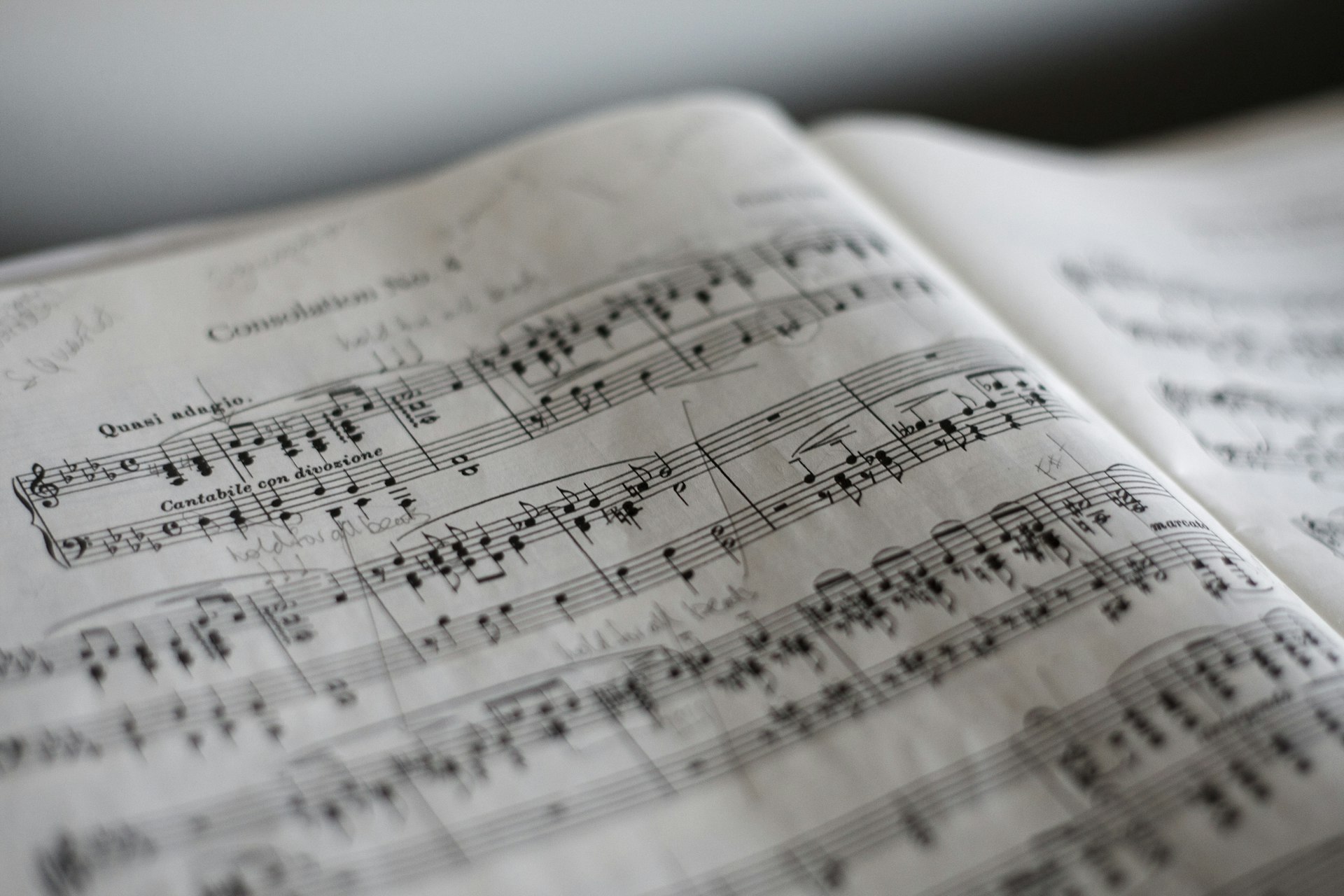
Live. Unscripted. Unrepeatable.
World-class instruction from distinguished artists and pedagogues—delivered live, globally, with limited seats and optional recording access. This is not passive viewing. It is high-stakes learning designed for serious musicians.
The most powerful form of music education ever invented — now open to anyone, anywhere in the world
Picture this. You open your laptop in São Paulo or Seoul, in Lagos or London, in a small town where the nearest concert hall is hours away. On your screen, a cellist who has performed with major orchestras around the world for twenty years is listening to a young student play the opening of the Dvořák concerto. The student finishes. The artist pauses, then speaks — not just to the student, but to every person watching. The next thirty minutes will change how that student thinks about music. And if you are paying attention, it will change how you think about it, too.
This is a masterclass.
This is not a lecture. It is not a webinar. It is not a pre-recorded video course taught by a celebrity. A masterclass is a living, breathing act of music-making — a tradition that stretches back more than 150 years to the salon of Franz Liszt in Weimar, where the greatest pianists of the nineteenth century gathered not for technique drills but for the kind of artistic transformation that only happens when a master musician works with a student in front of an audience, in real time, with nothing rehearsed and nothing scripted.
At The Global Conservatory, we bring this tradition online. Our faculty — selected by invitation from the world's leading conservatories, orchestras, and opera companies — offer live masterclasses via high-fidelity video. Students purchase a session, prepare their repertoire, and join from anywhere on earth. Some perform. All learn.
What follows on this page is everything you need to know: what a masterclass is and why it matters, how our sessions work, who they are for, and how to find the right one for you. Whether you are a conservatory student preparing for auditions, an adult learner returning to your instrument after decades, a parent exploring options for a talented child, or a faculty member considering joining our platform — this is where you start.
What is a masterclass?
A masterclass is a public teaching session in which a distinguished musician — the "master" — coaches individual students one at a time, in front of an audience. It is the oldest and most revered form of advanced music instruction in the Western classical tradition, and it works differently from anything else in music education.
How it unfolds
The format has remained remarkably consistent since Franz Liszt invented it in 1869. A student walks to the front of the room, announces the piece they will perform, and plays — uninterrupted — for a substantial portion of a movement or complete shorter work. The audience listens in full concert-quality silence. When the student finishes, the master responds.
What happens next is the heart of the experience. The master does not simply correct errors. Instead, they address questions of interpretation, musical meaning, phrasing, color, and emotional intention. They may demonstrate a passage on their own instrument. They may tell a story about the composer, about a performance they heard decades ago, about what the music demands from the performer as a human being. They ask the student to try again — and the difference, even after a single suggestion, can be extraordinary.
Each student's session lasts roughly 20 to 40 minutes. A full masterclass event typically features three to five students and runs one to three hours. Then the next student performs, and the process begins again.
The three roles
Every masterclass involves three distinct participants, and each one has a different experience:
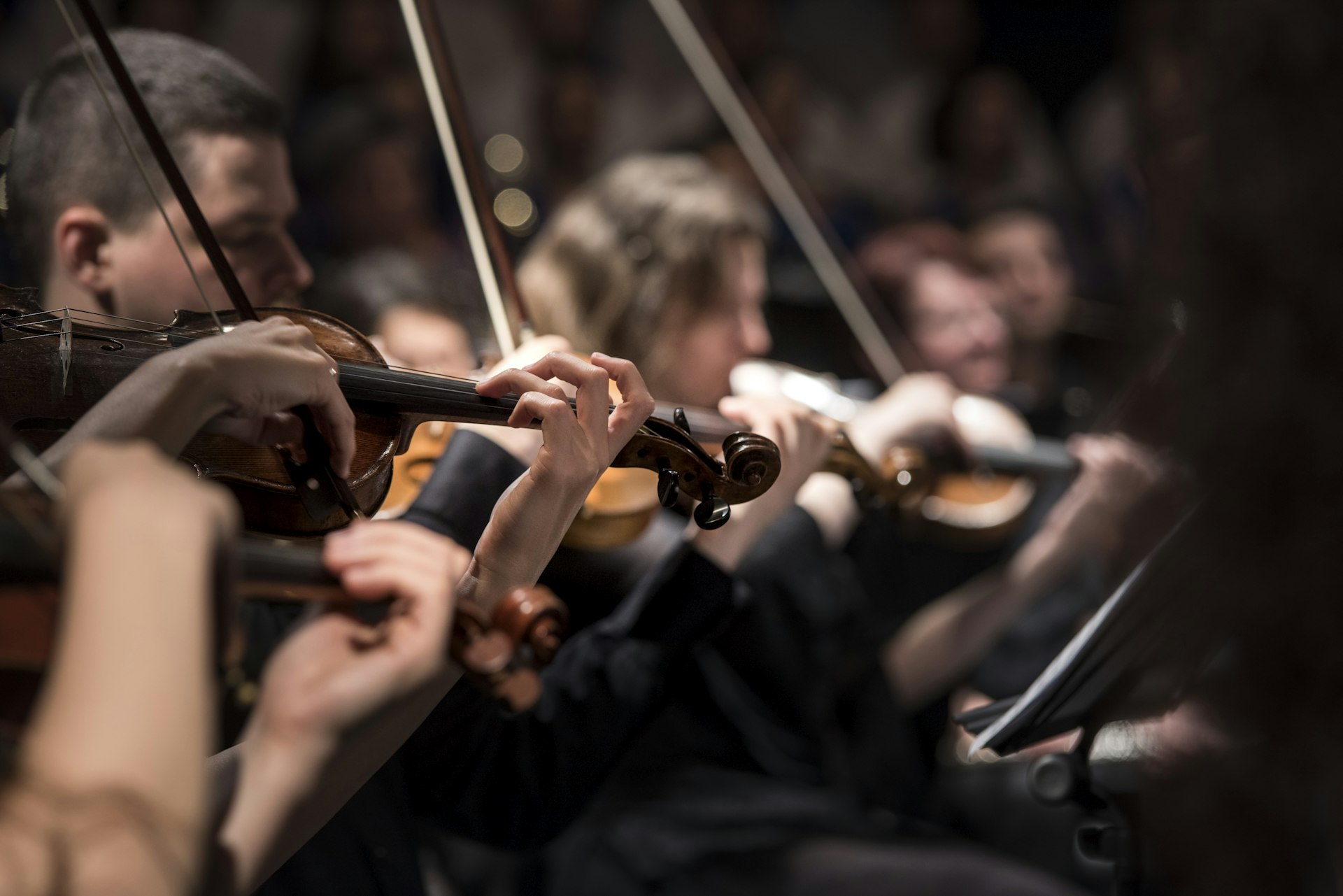
The master artist is an acknowledged expert — a soloist, principal orchestral player, distinguished professor, or competition laureate — who provides coaching, demonstration, and musical wisdom. Crucially, the master addresses their comments not just to the individual student but to the entire room, making every observation universally applicable. This dual-addressing is what separates a masterclass from a public lesson.
The performing student prepares a piece at the highest level they can achieve and performs it in front of the master and the audience. The public setting creates performance-level pressure that private lessons cannot replicate. The masterclass assumes the student has already solved basic technical problems — the focus is on interpretation, artistry, and musicianship at the most advanced level the student is capable of.
The observer watches the entire interaction and learns through what educational researchers call observational learning. This is not passive. Research published in the British Journal of Music Education has confirmed that masterclass observers develop skills across four distinct domains: technical, musical, performative, and pedagogic. Observers absorb new vocabulary, internalize higher artistic standards, hear repertoire they might not otherwise encounter, and witness the creative process of a master musician thinking in real time. Many experienced musicians consider the observer role equally valuable to performing — sometimes more so, because the observer can focus entirely on absorbing the teaching without the pressure of performance.
How a masterclass differs from a private lesson
The distinction matters. A private lesson is one-on-one, held in a practice room or studio, with a teacher who knows the student's history and development over months or years. The teacher starts and stops frequently, addresses technical development alongside interpretation, and builds a nurturing long-term relationship.
A masterclass is public. The master is often meeting the student for the first time. The student plays a substantial uninterrupted section before receiving any comments. The feedback focuses primarily on interpretation and artistry rather than technical fundamentals. And — this is the key point — the entire audience benefits equally from every word spoken. A single thirty-minute session educates an entire room.
Both formats are essential. Private lessons build the foundation. Masterclasses open windows that lessons alone cannot.
How it differs from workshops, clinics, and online courses
A workshop is participatory — all attendees practice specific skills together. A clinic is typically lecture-based. A pre-recorded online course (such as those on MasterClass.com, despite the name) features a famous musician teaching to a camera with no live students, no real-time interaction, and no unscripted coaching. These formats each have value, but none of them replicate the defining element of a true masterclass: the live, unscripted interaction between a master musician and a performing student, witnessed by an audience, where every moment is unrepeatable.
A 155-year tradition: from Liszt's salon to your screen
The masterclass is not a modern invention adapted for the internet age. It is one of the most enduring pedagogical traditions in all of Western art — and understanding its lineage is essential to understanding why it works.
Liszt and the invention of the masterclass (1869)
Franz Liszt — the most famous pianist of the nineteenth century, the inventor of the solo recital, and arguably the first modern celebrity — began holding group teaching sessions at the Hofgärtnerei in Weimar, Germany in 1869. His approach was revolutionary: instead of teaching students privately, he invited them to play for each other. He charged no fees. He refused to bring his own piano to demonstrate technique, believing that technical work should be done at home. Instead, he focused entirely on musical interpretation, teaching through anecdote, metaphor, humor, and the sheer force of his musical personality.
His students — Karl Tausig, Hans von Bülow, Moriz Rosenthal, Arthur Friedheim, Alexander Siloti, and dozens more — went on to establish piano traditions across Europe and America. The American pianist Amy Fay documented her experience in Music Study in Germany (1880), one of the first written accounts of what it felt like to be in the room when a great artist taught.
In 1872, Liszt's disciples founded the music college that bears his name in Weimar — now the Hochschule für Musik Franz Liszt Weimar — which has held summer masterclasses continuously since 1958, maintaining a direct lineage to the original teaching.
Casals at Marlboro: thirteen summers of revelation (1960–1973)
Pablo Casals, the Spanish cellist who single-handedly revived Bach's solo cello suites for the modern concert repertoire, first came to the Marlboro Music Festival in Vermont in 1960 at the invitation of Rudolf Serkin. What began as cello masterclasses expanded into something broader: Serkin suggested Casals also rehearse chamber orchestra compositions, creating what amounted to a masterclass for all instrumentalists. Casals gave masterclasses at Marlboro for thirteen consecutive summers, until shortly before his death in 1973 at age 96.
Witnesses described something extraordinary: even at that age, when Casals demonstrated a point on his cello, he drew a sound that dwarfed the volume and quality of the young cellists playing for him. As the cellist David Soyer put it: when you heard him play, he made you feel that music was the most important thing in the world at that moment. There was nothing else.
Heifetz at USC: the pencil, the wit, the standard (1962–)
Jascha Heifetz, widely regarded as the greatest violinist of the twentieth century, taught at the University of Southern California's Thornton School of Music for over twenty years. In 1962, he agreed to have his masterclasses filmed for national television, producing eight programs that remain among the most important documents of music pedagogy ever recorded.
Heifetz's style was precise and demanding. He sat behind a desk with the score in hand, tapping out rhythm with a pencil when students took even the smallest liberties. Yet he was also capable of extraordinary wit and warmth, including a famous deadpan parody of an untalented student that observers compared to Mozart's A Musical Joke. His students included Erick Friedman and a generation of violinists who carried his standards into orchestras and teaching studios around the world.
Rostropovich's Class 19: the emotional X-ray (1956–)
Mstislav Rostropovich became professor of cello at the Moscow Conservatory in 1956. His legendary studio — Class 19 — produced an astonishing roster of students: Natalia Gutman, Karine Georgian, David Geringas, Mischa Maisky, and Jacqueline du Pré among them.
Rostropovich's approach was unlike any other master teacher's. He never brought his cello to lessons — he demonstrated everything on the piano. He never tried to make copies of himself. Instead, he used vivid, often startling imagery to unlock the emotional core of the music. He told one student performing the Dvořák Concerto to imagine having three minutes to make a statement at the United Nations — and that should be the concerto. He told Natalia Gutman she played like a policeman in a glass booth, and that she should not be ashamed to weep at Rachmaninov. To Karine Georgian, he said she had not shed enough tears in her life.
Georgian later recalled that sometimes in a lesson, Rostropovich would look at you and it was like being emotionally X-rayed: he was seeing straight into the heart of your personality. His purpose was never to impose his own interpretation but to help each student discover their own artistic voice.
Bernstein, Schwarzkopf, Stern, and the modern era
Leonard Bernstein delivered six legendary lectures at Harvard in 1973 as the Charles Eliot Norton Professor of Poetry — a chair previously held by Stravinsky, Copland, T.S. Eliot, and W.H. Auden. Titled The Unanswered Question, the lectures embodied the masterclass ethos at its most expansive: a great musician making the most complex ideas accessible through performance, storytelling, and pedagogical brilliance.
Elisabeth Schwarzkopf, the German-Austrian soprano, conducted internationally renowned vocal masterclasses from the 1980s through 2003. Her standard was absolute — every breath, every expression, every vowel had to be exactly right.
Isaac Stern's 1979 visit to post-Cultural Revolution China, documented in the Academy Award-winning film From Mao to Mozart, captured transformative masterclasses at conservatories in Beijing and Shanghai. His teaching philosophy was simple and profound: don't use music to play the violin — use the violin to make music. His mentoring influence extended to Itzhak Perlman, Pinchas Zukerman, Yo-Yo Ma, and Midori.
Today, the masterclass tradition continues through artists like Perlman at Juilliard, Thomas Hampson and Joyce DiDonato in voice, and Jorma Panula in conducting — the Finnish pedagogue whose masterclass-style teaching produced Esa-Pekka Salonen, Sakari Oramo, and Osmo Vänskä. The lineage is unbroken. And The Global Conservatory exists to extend it — to make it available to every serious musician on earth, regardless of geography.
How masterclasses work at The Global Conservatory
Our masterclass model is built on a simple principle: the same experience that has transformed musicians at Juilliard, the Royal Academy of Music, and the Moscow Conservatory should be available to anyone, anywhere. Here is exactly how it works.
Faculty announce a session
A member of our faculty — a soloist, principal orchestral player, distinguished professor, or guest artist — schedules a masterclass on our platform. They choose the date, time, duration, instrument focus, repertoire guidelines, and the number of available slots. Some sessions are open to all levels. Others are designed for advanced students preparing for competitions or auditions. Each session is listed on our Upcoming Masterclasses page with full details.
Students register
You browse our upcoming sessions by instrument, faculty member, date, or level. When you find a session that fits, you purchase your spot directly on our platform. Some masterclasses offer both performer and observer access — performer slots are limited (typically two to five per session), while observer capacity is larger. Others are open to all participants. Faculty set their own pricing.
Performers prepare their repertoire
If you have secured a performer slot, you prepare the piece or excerpt specified in the session description. You will play it live for the master artist and all observers. The preparation process is itself a powerful learning experience — the pressure of knowing you will perform publicly pushes you to a higher standard than ordinary practice.
Everyone joins live
At the scheduled time, all registered participants join the session via high-fidelity video with professional audio optimization for music. The master artist coaches each performer in turn. Observers watch, listen, and absorb — taking notes, hearing repertoire they may not have encountered, internalizing the artist's approach to interpretation. Some sessions include a Q&A period where observers can ask the faculty member questions directly.
Recordings join the library
Many sessions are recorded and made available in our Masterclass Library and Archives & Replays section, where you can revisit the coaching at your own pace. This growing library of recorded masterclasses becomes a permanent educational resource — organized by instrument, faculty, and level.
Who are our masterclasses for?
The short answer: anyone who is serious about music. The masterclass format is uniquely democratic — a single session serves performers, observers, beginners, and professionals simultaneously. But different participants come to masterclasses for different reasons, and we want every visitor to this page to see themselves clearly.
Conservatory and university students
If you are studying music at the college or graduate level, masterclasses provide what your regular lessons cannot: exposure to multiple artistic perspectives, performance experience in front of an audience, and the chance to be coached by artists you might never meet at your own institution. A violinist studying at a regional conservatory can work with a principal player from a major European orchestra. A singer preparing for competitions can receive feedback from an internationally active operatic artist. These encounters supplement and enrich your primary studies in ways that few other experiences can match.
Pre-professional musicians
If you are preparing for orchestra auditions, opera company positions, competition rounds, or graduate school applications, masterclasses offer high-stakes performance practice with expert feedback. The pressure of playing for a distinguished artist and an audience of peers simulates audition conditions more realistically than any practice session in your living room. And the feedback itself — focused on interpretation, artistry, and presence — addresses exactly the qualities that separate successful audition candidates from technically proficient ones who do not advance.
Adult learners and returning musicians
If you played as a child and stopped, or if you began your instrument later in life, masterclasses may feel intimidating. They should not. The observer role was designed for you — and decades of tradition confirm that observers learn as much as, or sometimes more than, the students who perform. You will hear repertoire you love discussed at a depth that recordings alone cannot provide. You will understand what great musicians listen for. You will return to your own practice with new ears. And when you are ready, you can perform as well.
Our Lifelong Learning program includes masterclasses specifically designed for adult learners — supportive environments where the focus is on musical joy and growth, not competition.
Music educators and private teachers
Watching how a master artist teaches is itself a masterclass in pedagogy. What metaphors do they use? How do they diagnose a musical problem in seconds? How do they balance encouragement with honesty? How do they communicate complex ideas about phrasing or color in language a student can immediately apply? Teachers who observe masterclasses consistently report that they take away new approaches they can use in their own studios the very next day.
Parents and families
If your child studies music seriously, masterclasses provide exposure to internationally accomplished artistry and teaching that may not be available in your area. Observing a masterclass helps young musicians understand what the highest levels of their discipline look and sound like — not through recordings, but through the live, unscripted process of an artist working with a student in real time. This is aspirational education in its purest form.
Young and emerging musicians
If you are a talented young musician — at the pre-college level, perhaps dreaming of conservatory — masterclasses offer something no amount of private study can replace: the experience of watching how professionals think about music. The students who go furthest in this field are the ones who seek out as many different artistic perspectives as possible. A masterclass puts you in direct contact with the thinking of an artist at the peak of their career. That exposure compounds over time.
Explore the Masterclass Series
Five pathways into our masterclass ecosystem. Choose the one that fits where you are right now.
Upcoming Masterclasses
Browse scheduled sessions by instrument, faculty, and date. Secure your seat as a performer or observer.
View schedule → 02Archives & Replays
Watch recorded masterclasses from past sessions. Learn from every coaching moment at your own pace.
Browse archives → 03Host or Perform
Faculty: propose a masterclass session. Students: apply for performer slots in upcoming sessions.
Learn more → 04Masterclass Library
Our growing catalog of recorded masterclasses, organized by instrument, level, and faculty member.
Explore library → 05Lifelong Learning
Masterclasses designed for adult learners and returning musicians. No audition required. All levels welcome.
Get started →
Performing and observing: two paths, equal value
One of the most common misconceptions about masterclasses is that the real learning happens only for the student who performs. This is understandable — the performer is the visible protagonist of the session. But more than 150 years of masterclass tradition, and a growing body of educational research, confirms something that experienced musicians have always known: the observer learns as deeply as the performer, and sometimes more.
What you gain as a performer
Performing in a masterclass is one of the most concentrated learning experiences available to a musician. In twenty to forty minutes, you receive focused, individualized coaching from a master artist — the kind of intensive attention that you would normally experience only in a private lesson with an internationally accomplished teacher, but with the added dimension of an audience that raises the stakes to performance level.
The coaching addresses the dimensions of musicianship that matter most at advanced levels: phrasing, color, emotional intention, structural understanding, stylistic authenticity, and the projection of a coherent artistic vision. The master may hear something in your playing that your regular teacher has not addressed — not because your teacher is less capable, but because different ears hear different things. That fresh perspective can be transformative.
Performing in a masterclass is also an act of generosity toward the other participants. Your willingness to be vulnerable in public — to play your best and then receive honest feedback — creates the learning experience for every observer in the room. This is a tradition that works because musicians support each other.
What you gain as an observer
Observing a masterclass is not passive attendance. It is active, focused learning through what psychologists call observational learning — the process by which we develop skills, vocabulary, and standards by watching experts work.
As an observer, you will:
- Hear repertoire discussed at a depth that recordings alone cannot provide. When a master artist explains why a particular phrase in the Brahms sonata must breathe differently from the same phrase in Schumann, you understand something about both composers that no textbook teaches.
- Absorb the vocabulary and thought processes of a master musician. How does the artist describe color? What metaphors do they use for phrasing? How do they diagnose a problem in seconds? This vocabulary becomes part of your own musical thinking.
- Develop your ear. Hearing the same passage played before and after coaching — and learning to perceive the specific difference the master identified — trains your ability to listen critically. This transfers directly to your own practicing.
- Witness performance under pressure. Watching how other musicians handle nerves, respond to feedback, and recover from mistakes teaches you something about the psychological dimension of performance that you can only learn from seeing it happen live.
- Discover new artistic standards. Every masterclass introduces you to a particular artist's standard of excellence. Over time, exposure to multiple master artists gives you a rich, multidimensional understanding of what great music-making sounds like.
If you are an educator, add another dimension: watching how a master artist teaches gives you tools you can use in your own studio. What techniques do they use to communicate a musical idea? How do they balance encouragement with honest critique? These are pedagogical insights that no education course can replicate.
How to prepare for a masterclass
Whether you are performing or observing, a little preparation makes a significant difference. Here is what experienced musicians and educators recommend.
If you are performing
- Choose repertoire wisely. Select a piece you know well — ideally one you have been working on with your teacher — but that still has room for growth. The masterclass is not the place to debut a piece you learned last week. It is the place to bring something you have lived with and want to understand more deeply.
- Prepare to play uninterrupted. In a traditional masterclass, you will play a complete movement or substantial section before receiving any feedback. Practice performing the piece from start to finish without stopping, even when you make mistakes. The ability to play through errors is a skill in itself.
- Memorization is preferred but not always required. Performance traditions vary by instrument, and individual faculty may specify their expectations in the session description. When in doubt, memorize. It frees you to communicate musically rather than read.
- Bring an open mind. The master may have a completely different perspective on the piece than you or your teacher. This is not a contradiction — it is the point. Different artists hear different things in the same music, and exposure to multiple perspectives is what makes you a more complete musician.
- Nerves are normal and expected. Everyone who performs in a masterclass is nervous. The master knows this. The audience knows this. The act of performing under pressure is itself part of the learning — it simulates the conditions you will face in auditions, competitions, and concerts.
If you are observing
- Listen for the "before and after." Pay close attention to how a passage sounds before the master's comments and after the student applies them. The specific difference you hear is the lesson.
- Take notes. Write down phrases, metaphors, or techniques the master uses that resonate with you. These become part of your own musical vocabulary.
- Focus on the teaching, not just the playing. How does the master communicate their ideas? What analogies do they use? How do they structure their feedback? The pedagogy is as valuable as the musical content.
- Apply what you learn. After the masterclass, take one specific insight into your own practice room and try it. The value of a masterclass compounds when you act on what you hear.
Technical setup for online masterclasses
Our masterclasses are conducted via high-fidelity video with optimized audio settings for music. For the best experience:
- Use a wired internet connection whenever possible — ethernet is more stable than Wi-Fi for live audio
- Use headphones or quality speakers — laptop speakers compress the audio range and you will miss nuance
- If performing, use an external microphone positioned near your instrument — a USB condenser mic or a dedicated recorder like the Zoom H1n provides significantly better fidelity than a laptop microphone
- Find a quiet room with minimal echo — hard floors and bare walls reflect sound, which degrades audio quality for performers
- Enable "Original Sound for Musicians" in your video settings if prompted — this disables noise suppression and preserves musical fidelity
- Test your setup in advance using the link provided when you register
Masterclass formats
Our faculty design masterclasses in several formats, depending on the instrument, repertoire, and pedagogical goals. Here is what you may encounter:
Standard masterclass (60–90 minutes)
The core format. One faculty member coaches two to four performers in sequence, with all observers watching the full session. This follows the traditional masterclass model described above. Most sessions on our Upcoming Masterclasses page follow this format.
Extended intensive (half-day or multi-session)
Some faculty offer longer programs that span several hours or multiple days — for example, a weekend intensive focusing on Bach cello suites, or a three-session series on operatic recitative. These allow for deeper exploration of a single composer, genre, or performance challenge. Extended intensives may include supplementary components like guided listening, score study, or group discussion alongside the core masterclass coaching.
Division-specific masterclasses
Our instrumental divisions — Strings, Brass, Woodwinds, Piano, Voice, Conducting, Percussion, and more — each curate masterclasses tailored to the specific challenges of their discipline. A brass masterclass addresses different concerns (endurance, intonation in the upper register, orchestral excerpt preparation) than a vocal masterclass (language, text interpretation, breath management). Division pages link directly to relevant upcoming masterclasses so you can find sessions aligned with your instrument.
Lifelong Learning masterclasses
Designed specifically for adult learners and returning musicians, these sessions take place in a supportive environment where the focus is on musical growth and enjoyment rather than pre-professional development. Faculty who offer Lifelong Learning masterclasses are chosen for their warmth, patience, and ability to meet students at any level. No audition or minimum level is required. Find these sessions on our Lifelong Learning page.
Guest artist masterclasses
Periodically, we invite distinguished artists from outside our regular faculty to offer special masterclasses — soloists on international concert tours, competition jurors, festival directors, and other musicians of extraordinary stature. These sessions are announced in advance and often generate significant demand.
Why this matters
For 155 years, the masterclass has been one of the most transformative experiences available to a musician. But for most of that history, it has also been one of the most inaccessible. You had to be in the right city. You had to be enrolled at the right school. You had to know the right people. You had to be able to travel, to afford festival tuition, to navigate the gatekeeping that has defined classical music education for generations.
Talent is everywhere. Access is not. This is the founding conviction of The Global Conservatory, and it applies to masterclasses as powerfully as it applies to private lessons, studio classes, or any other form of instruction.
A fifteen-year-old cellist in Bogotá should be able to hear how a principal player from a major orchestra approaches the Schumann concerto. A returning pianist in rural Japan should be able to watch how a Juilliard professor coaches Chopin. An adult learner in Lagos should not have to wonder what a masterclass even is — they should be able to experience one, this week, from their living room.
This is not a fantasy. This is what we built. Every masterclass on our platform is open to anyone, anywhere, at any stage of their musical life. The tradition that Liszt began in a German salon — the tradition carried forward by Casals, Heifetz, Rostropovich, Bernstein, Stern, Schwarzkopf, Perlman, and their successors — is now available to every serious musician on earth.
The only requirement is that you care about music.
For faculty: host a masterclass
If you are a performing artist, conservatory professor, orchestral musician, or distinguished educator, we invite you to consider offering masterclasses through The Global Conservatory.
Our platform handles scheduling, registration, payments, and technical delivery. You choose the format, repertoire focus, duration, and pricing. You teach from wherever you are — your studio, your home, a concert hall green room between performances. Your masterclasses reach students in countries you may never visit, extending your artistic and pedagogical influence far beyond the walls of any single institution.
Faculty who currently teach at the world's leading conservatories, orchestras, and opera companies already offer masterclasses on our platform. If you are interested in joining them, we would like to hear from you.
Learn about hosting a masterclass →Common questions
Do I need to be an advanced musician to attend?
No. Observers at any level benefit from masterclasses — you do not need to be able to play the repertoire being coached to learn from it. If you are considering performing, check the session description for any level guidelines the faculty member has specified. Many sessions welcome performers at the intermediate level and above. Our Lifelong Learning masterclasses are specifically designed for adult learners at all levels.
What is the difference between a performer slot and observer access?
Performers play their prepared repertoire live and receive direct coaching from the master artist. Performer slots are limited — typically two to five per session. Observers watch the full session and learn through the interaction. Both roles are valuable and both are integral to the masterclass tradition. Some sessions offer only observer access (particularly recorded replays); others offer both.
How much do masterclasses cost?
Faculty set their own pricing. Costs vary by session, format, and faculty member. Performer slots typically cost more than observer access, reflecting the individualized coaching involved. Exact pricing is displayed on each session listing on our Upcoming Masterclasses page.
What technology do I need?
A computer or tablet with a stable internet connection, a webcam, and headphones or quality speakers. If you are performing, an external microphone significantly improves audio quality. Our team provides setup instructions and a test link when you register.
Can I watch recorded masterclasses if I miss a live session?
Many sessions are recorded and made available in our Archives & Replays section and Masterclass Library. Not all sessions are recorded — check the session listing for details.
I am a teacher. Can I bring my students to observe?
Absolutely. Many teachers attend masterclasses alongside their students as a shared learning experience. You can register individually or contact us about group access for your studio.
How do I apply for a performer slot?
For most sessions, performer slots are available on a first-come, first-served basis through our Upcoming Masterclasses page. Some special sessions or guest artist masterclasses may require an application. Details are listed with each session. You can also visit our Host or Perform Applications page for more information.
I have never attended a masterclass before. Will I understand what is happening?
Yes. The masterclass format is intuitive: a student plays, an artist responds, the student tries again. You do not need specialized vocabulary or advanced musical knowledge to appreciate what is happening. The emotional and artistic dimensions of the exchange are accessible to anyone who cares about music. You have already read this page — you understand more about masterclasses than most people who attend their first one.
Meet our faculty
Our teaching artists come from the world's leading conservatories, orchestras, and opera companies. They are selected by invitation and teach because they believe in what we are building. Browse their profiles, instruments, and specializations — and find the masterclass that is right for you.
Browse Faculty A–Z →Where to go next
Depending on where you are in your musical journey, one of these pages is your next step:
- Upcoming Masterclasses — Browse scheduled live sessions. Filter by instrument, faculty, date, or level. Register as a performer or observer.
- Archives & Replays — Watch recorded sessions from past masterclasses. Learn at your own pace, pause, rewind, and revisit.
- Host or Perform Applications — Faculty: propose a masterclass. Students: apply for performer slots in sessions that require audition.
- Masterclass Library — Our curated catalog of recorded masterclasses, organized by instrument, level, and faculty. A permanent resource.
- Lifelong Learning — Masterclasses and programs designed for adult learners, returning musicians, and anyone who loves music. No audition. All levels.
Not sure where to start?
Our team can help you find the right masterclass for your instrument, level, and goals. Whether you are a student, parent, educator, or returning musician, we will point you in the right direction.
Schedule a Consultation