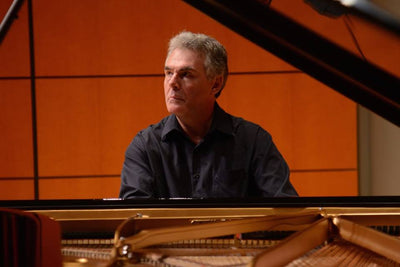
The piano was invented around 1700 by Bartolomeo Cristofori in Florence, Italy. His revolutionary innovation was simple yet profound: unlike the harpsichord, which plucked strings at a fixed volume, Cristofori's new instrument used hammers that struck strings with varying force. For the first time, a keyboard player could play piano (soft) and forte (loud) — giving the instrument its full name: pianoforte.
This dynamic capability transformed music. Composers could now write keyboard works with the expressive range previously reserved for orchestras. Mozart composed 27 piano concertos that exploited this new expressivity. Beethoven pushed the instrument to its limits, demanding stronger construction and greater range.
The Romantic era brought the piano to its full flowering. Chopin explored its poetic possibilities in nocturnes and ballades of unprecedented intimacy. Liszt transformed it into a vehicle for virtuosic display rivaling the full orchestra. Clara Schumann proved women could master the instrument at the highest level.
In the 20th century, the piano became the foundation of jazz and popular music. From Scott Joplin's ragtime to Art Tatum's impossible improvisations, from Bill Evans' harmonies to Herbie Hancock's explorations — the piano continued to evolve while remaining central to every genre.