
The Global Conservatory
Electronic Music ProductionMusic Production & Technology
Master the art and science of electronic music — from sound synthesis and beat design to live performance and commercial release.
The Certificate in Electronic Music Production at The Global Conservatory is a 6-month immersive program for producers, sound designers, and electronic artists ready to develop professional-grade skills. You'll build fluency across synthesizers, samplers, drum machines, and digital audio workstations while developing your unique sonic identity.
Every module is hands-on. You'll design sounds from raw oscillators, program beats that move dance floors, arrange tracks across genres from techno to ambient, and finish the program with a release-ready EP. Our faculty includes working electronic artists and engineers who've shaped records across house, techno, IDM, bass music, and experimental electronic genres.
Why This Certificate
Electronic music is the dominant sonic force of the 21st century. From Berlin techno clubs to global streaming playlists, from film scores to video game soundtracks — electronic production is the universal language of modern sound.
Yet most producers are self-taught, cobbling together knowledge from YouTube tutorials and forum posts. This certificate provides what self-teaching cannot: a structured, rigorous curriculum that connects synthesis theory with arrangement craft, mixing science with artistic vision, and technical skill with career strategy.
We don't teach you to copy genres. We teach you to understand the principles beneath them — so you can innovate, not imitate. Whether you're drawn to minimal techno, lush ambient, aggressive bass music, or something that doesn't have a name yet, this program gives you the tools to realize your vision at a professional level.
Specialty Tracks
Three Core Disciplines
The certificate is built around three interconnected pillars that together form a complete electronic music production skill set.
Sound Design & Synthesis
Deep dive into synthesizers, samplers, and the art of creating original sounds. Master subtractive, FM, wavetable, and granular synthesis. Build custom patches, design textures from scratch, and develop a signature sonic palette that defines your artistic identity.
Beatmaking & Arrangement
Drum programming, groove design, and electronic arrangement techniques. Learn to build rhythms that move bodies — from four-on-the-floor house grooves to complex polyrhythmic patterns. Understand arrangement structures across electronic genres and master the art of tension, release, and energy flow.
Performance & Release
Live electronic performance, mastering for streaming platforms, and distribution strategies. Prepare Ableton Live sets, design performance rigs, master your tracks for digital release, and build a distribution strategy that gets your music heard on Spotify, Beatport, Bandcamp, and beyond.

Core Discipline
Sound Design Mastery
The ability to create original sounds is what separates professional electronic producers from hobbyists. In this track, you'll move beyond presets and learn to sculpt sound from raw waveforms. You'll understand the physics of synthesis, the psychology of timbre, and the creative workflows that turn abstract parameters into emotional experiences.
From the warm analog tones of subtractive synthesis to the crystalline complexity of granular processing, you'll develop the ear and the technique to create any sound you can imagine — and many you never expected.
- Subtractive, FM, additive, and wavetable synthesis engines
- Granular synthesis and spectral processing techniques
- Sampling, resampling, and creative sample manipulation
- Modular synthesis concepts and Max/MSP integration
Your sounds. Your identity. Built from the waveform up.
Creative Process
Production Workflow
A great idea means nothing if you can't execute it. This track teaches the complete production workflow — from the first spark of inspiration to a finished, release-ready track. You'll learn how professional producers organize sessions, manage creative momentum, and make decisive artistic choices under pressure.
We cover both linear and non-linear workflows, teaching you to work effectively in Ableton Live's Session View, FL Studio's pattern-based system, and traditional arrangement timelines. The goal is fluency: the ability to move from idea to finished track without technical friction slowing your creative flow.
- Session architecture and template design for speed
- Sound selection, layering, and frequency allocation
- Building tracks from loops to full arrangements
- Creative decision-making and overcoming production blocks
From blank canvas to finished master — every session.
Inspired By Pioneers
The Innovators Who Shaped Electronic Music
These artists didn't just make electronic music — they invented entirely new ways of hearing. Their breakthroughs in synthesis, production, and performance define the landscape you'll be creating within.
"The synthesizer is the most important instrument of the 20th century."— Robert Moog
Kraftwerk
Electronic / Synth-Pop
Pioneers who invented the blueprint for electronic pop, influencing hip-hop, techno, and synth-pop
Brian Eno
Ambient / Experimental
Creator of ambient music, generative composition pioneer, and visionary producer
Aphex Twin
IDM / Experimental
Redefined electronic music boundaries with groundbreaking sound design and complex rhythmic structures
Daft Punk
French House / Disco
Merged electronic production with pop songwriting, creating genre-defining albums and live spectacles
Björk
Experimental Electronic
Fused electronic production with avant-garde composition and vocal artistry across decades of innovation
Skrillex
Bass Music / Dubstep
Brought bass music to mainstream consciousness, redefining sound design standards for a generation
Deadmau5
Progressive House
Master of meticulous production, complex arrangement, and innovative live performance technology
Arca
Avant-Garde Electronic
Pushed electronic music into radical new territory with deconstructed rhythms and visceral sound design
Technology
Industry-Standard Tools & Systems
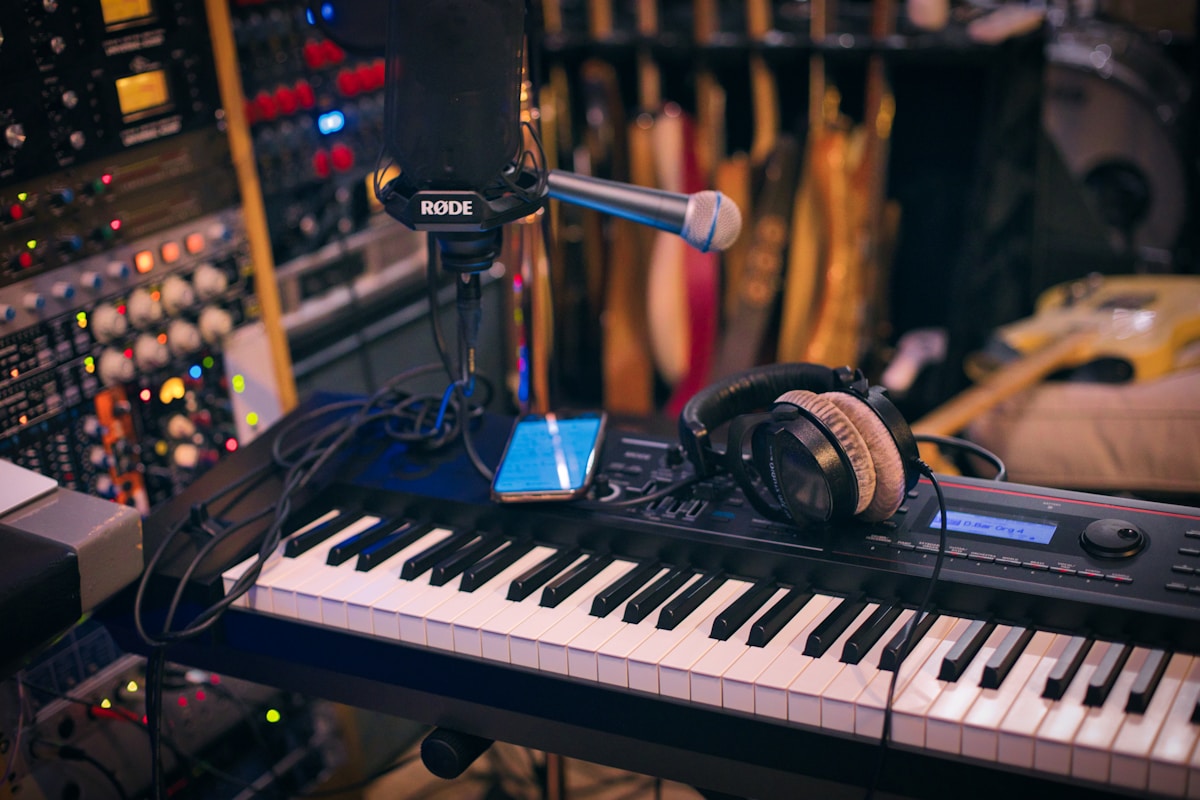
You'll gain deep proficiency in the tools that define professional electronic music production. We focus on Ableton Live and FL Studio as primary DAWs, supplemented by hardware synthesizers, modular systems, and advanced software environments like Max/MSP.
But tools are only as powerful as your understanding of them. We teach the principles behind the interfaces — so when a new plugin or instrument appears, you already understand how it works.
- Ableton Live (Session and Arrangement views, Max for Live)
- FL Studio (pattern-based workflow, mixer routing)
- Hardware synthesizers, drum machines, and samplers
- Modular synthesis (VCV Rack, Eurorack concepts, Max/MSP)
Master the machines. Then transcend them.
Career Strategy
Industry & Career Pathways
The electronic music industry operates differently from traditional music business. Labels are smaller and more agile. Self-releasing is not just viable — it's often preferred. Sync licensing for film, TV, and games is a growing revenue stream. And live performance circuits, from intimate club nights to massive festivals, create sustainable income for skilled performers.
This module teaches you how the industry actually works — not the theoretical version from textbooks, but the real relationships, platforms, and strategies that working electronic artists use to build sustainable careers.
- Label relationships, demo submissions, and A&R culture
- Self-release strategies via Bandcamp, DistroKid, and LANDR
- Sync licensing for film, television, and gaming
- Building a live performance career and booking strategy
Art and commerce, in productive tension.
Full Curriculum
What You'll Learn
Six intensive modules covering every dimension of electronic music production — from raw synthesis to release strategy.
Sound Synthesis Fundamentals
- Subtractive synthesis and filter design
- FM synthesis and operator programming
- Wavetable synthesis and morphing techniques
- Granular synthesis and spectral processing
Sampling & Processing
- Sample manipulation and creative chopping
- Resampling techniques and layering workflows
- Creative effects chains and parallel processing
- Sound design workflows from concept to patch
Rhythm & Groove Design
- Drum synthesis and acoustic drum emulation
- Breakbeat programming and slice manipulation
- Polyrhythmic patterns and metric modulation
- Groove quantization and humanization techniques
Arrangement & Structure
- Electronic song structures across genres
- Transitions, builds, drops, and breakdowns
- Tension and release dynamics in dance music
- Genre conventions from house to ambient to bass
Mixing for Electronic Music
- Sidechain compression and pumping techniques
- Spatial effects, reverb design, and delay throws
- Stereo imaging and mid/side processing
- Sub-bass management and low-end clarity
Release & Distribution
- Mastering for streaming platforms and vinyl
- Digital distribution via Beatport, Spotify, Bandcamp
- Playlist pitching and promotional strategy
- Sync licensing preparation and submission
"Electronic music isn't about replacing musicians. It's about expanding what music can be."
— TGC FacultyYour Final Deliverables
Capstone EP & Portfolio
Your capstone is a comprehensive body of work that demonstrates mastery across synthesis, production, mixing, and release preparation. You'll produce a 4-track EP, design a live performance set, build a professional sound library, complete a remix project, and write a release strategy document — proving your readiness for the electronic music industry.
- 4-track original EP (mixed and mastered for release)
- Live performance set (30-minute Ableton Live or DJ hybrid set)
- Sound design library (50+ original patches and samples)
- Remix project (official-style remix of provided stems)
- Release strategy document (marketing, distribution, and promotion plan)
Certificate & Badges Awarded
Certificate of Completion
Electronic Music Production — The Global Conservatory
Digital badges in:
Your 6 Months
The Program Experience
A structured journey from intermediate producer to release-ready electronic artist in four intensive phases.
Synthesis & Foundations
Build your synthesis vocabulary. Master subtractive, FM, wavetable, and granular engines. Establish your DAW workflow and sound design fundamentals. Months 1–2.
Advanced Production
Explore genre-specific production techniques. Deep-dive into beat construction, sampling workflows, and arrangement strategies across house, techno, bass, ambient, and experimental styles. Months 2–3.
Mixing & Performance
Develop your mixing ear for electronic music. Learn sidechain techniques, spatial design, and low-end management. Build your live performance set and stage-ready rig. Months 4–5.
Capstone & Release
Produce your 4-track EP capstone. Master for release. Build your distribution and promotion strategy. Present your work to faculty and peers. Months 5–6.
Student Voices
Student Voices
Student Voices — Coming Soon
Testimonials from students will be published as our programmes mature. Our courses are designed to deliver the skills and outcomes described on this page.
Questions
Frequently Asked Questions
Your Weekly Learning Rhythm
A structured cadence designed to build mastery through consistent practice, expert feedback, and peer collaboration.
Apply Now
Request Information
Ready to take your electronic music production to a professional level? Complete this form and our admissions team will reach out to discuss the program, assess fit, and answer your questions.
Start Your Electronic Music Journey.
Your release-ready EP is six months away. Join The Global Conservatory's Electronic Music Production certificate and build the skills, portfolio, and network to launch your career in electronic music.
About This Credential
The Global Conservatory issues professional certificates and credentials. TGC certificates are non-degree credentials designed to validate specialized skills and knowledge. They do not represent academic degrees, college credits, or accredited diplomas. For questions about credential recognition, visit our credential verification page.
Start Your Journey
Ready to Enroll?
Submit your interest and our admissions team will contact you with program details, pricing, and next steps.
No commitment required. Financial aid available for qualifying students.