
The Global Conservatory
Conducting FundamentalsPerformance & Specialization
Leading ensembles with clarity, expression, and vision — the art of making music through others.
The Certificate in Conducting Fundamentals at The Global Conservatory is a 6-month intensive program for intermediate musicians who want to develop the skills to lead ensembles with authority and artistry. You will study baton technique, score analysis, rehearsal methodology, and the physical vocabulary of conducting — learning to communicate musical ideas through gesture, expression, and leadership.
Conducting is the most paradoxical of all musical disciplines: the conductor is the only musician who makes no sound, yet shapes every note. This program teaches you to lead from the podium with clarity, efficiency, and expressive power — whether you aspire to conduct orchestras, choirs, wind ensembles, or community groups.
Why This Certificate
The conductor stands before an ensemble and, without making a sound, shapes everything: tempo, dynamics, phrasing, balance, and emotional arc. It is an art of communication so profound that a single gesture can transform a hundred individual voices into one unified expression.
Yet conducting is perhaps the most misunderstood musical discipline. It looks simple — wave your arms and the music happens. In reality, it requires deep score knowledge, extraordinary listening skills, leadership psychology, and a physical technique as demanding as any instrument.
This certificate teaches conducting as it truly is: a synthesis of musical intelligence, physical expression, and human leadership. Whether you dream of leading a symphony orchestra, building a community choir, or simply becoming a better ensemble musician, understanding conducting transforms your entire relationship with music.
Specialty Tracks
Three Core Disciplines
The certificate is built around three interconnected pillars that together form the complete conducting skill set.
Baton Technique
Master the physical vocabulary of conducting: beat patterns in all meters, preparatory gestures, cutoffs, dynamic shaping, tempo changes, fermatas, and the art of the left hand. Develop a clear, expressive, and efficient baton technique that communicates your musical intentions unambiguously to any ensemble.
Score Study
Learn to read and analyze full orchestral and choral scores with fluency. Develop the ability to hear the score in your inner ear, identify structural landmarks, plan interpretive decisions, and mark scores for rehearsal efficiency. Score study is the foundation upon which all conducting authority rests.
Rehearsal Craft
Develop the skills to run efficient, productive, and inspiring rehearsals. Learn error detection, communication strategies, rehearsal planning, pacing, and the psychology of ensemble leadership. Great conductors are, above all, great rehearsers — and great rehearsal technique is a learnable craft.

Physical Expression
Gesture & Communication
The conductor's body is the instrument. Every motion — from the arc of the baton to the angle of the eyebrows — communicates musical information to the ensemble. This track develops the physical vocabulary that allows you to shape sound through gesture: left-hand independence for dynamics and phrasing, facial expression for character and mood, eye contact for cueing and connection.
You will study the great conducting traditions from the Romantic school of large, sweeping gestures to the modern approach of economical clarity. You will develop your own natural conducting style — one that is both physically efficient and emotionally compelling.
- Left hand independence: dynamics, phrasing, and sustained lines
- Facial expression and eye contact as conducting tools
- Musical gesture: legato, staccato, marcato, and tenuto in the baton
- Physical efficiency: avoiding tension and building conducting endurance
Your body speaks the music.
Intellectual Foundation
Score Preparation
A conductor who steps onto the podium without thorough score preparation is not conducting — they are merely keeping time. True conducting begins at the desk, weeks before the first rehearsal, with deep analytical study of the score. You must know every note, every entrance, every harmonic shift, every dynamic marking — and understand how they all serve the composer's expressive intent.
This track teaches comprehensive score reading: transposing instruments, reading C clefs, understanding orchestration, reducing full scores at the piano, and building the inner hearing that allows you to hear the entire score in your mind before a single note is played.
- Full score reading: transposition, clefs, and instrument ranges
- Score reduction at the piano: essential keyboard skills for conductors
- Structural analysis: form, harmony, and phrase structure for interpretation
- Score marking: developing an efficient personal marking system
Know the score. Then conduct the music.

Inspired By Masters
The Conductors Who Defined the Art
These conductors transformed the art of ensemble leadership, each bringing a unique vision to the podium and showing that there are many paths to musical greatness through conducting.
"The conductor must breathe life into the score. It is not enough to follow the notes; one must find the music between them."— Leonard Bernstein
Leonard Bernstein
Orchestral / Education
The ultimate musician-conductor whose passionate podium presence, Young People's Concerts, and compositions inspired generations to love classical music
Herbert von Karajan
Orchestral / Opera
Master of orchestral sonority who built the Berlin Philharmonic into the world's most famous orchestra through meticulous rehearsal and recording standards
Marin Alsop
Orchestral / Community
Groundbreaking conductor who shattered glass ceilings while championing community engagement and proving that great music belongs to everyone
Gustavo Dudamel
Orchestral / Youth
El Sistema's most famous graduate whose infectious energy and commitment to music education has revitalized orchestral culture worldwide
Simon Rattle
Orchestral / Contemporary
Championed contemporary music and innovative programming while leading the Berlin Philharmonic into the 21st century with bold artistic vision
Nadia Boulanger
Conducting / Pedagogy
The first woman to conduct major American and European orchestras, and arguably the most influential music teacher of the 20th century
Carlos Kleiber
Orchestral / Opera
The conductor's conductor, whose sparse but electrifying performances set standards of interpretive intensity that remain unmatched decades later
Seiji Ozawa
Orchestral / Opera
Led the Boston Symphony for 29 years, bridging Eastern and Western musical cultures with elegance and bringing Japanese musical sensibility to the Western canon
Instrumental Leadership
Orchestral Conducting
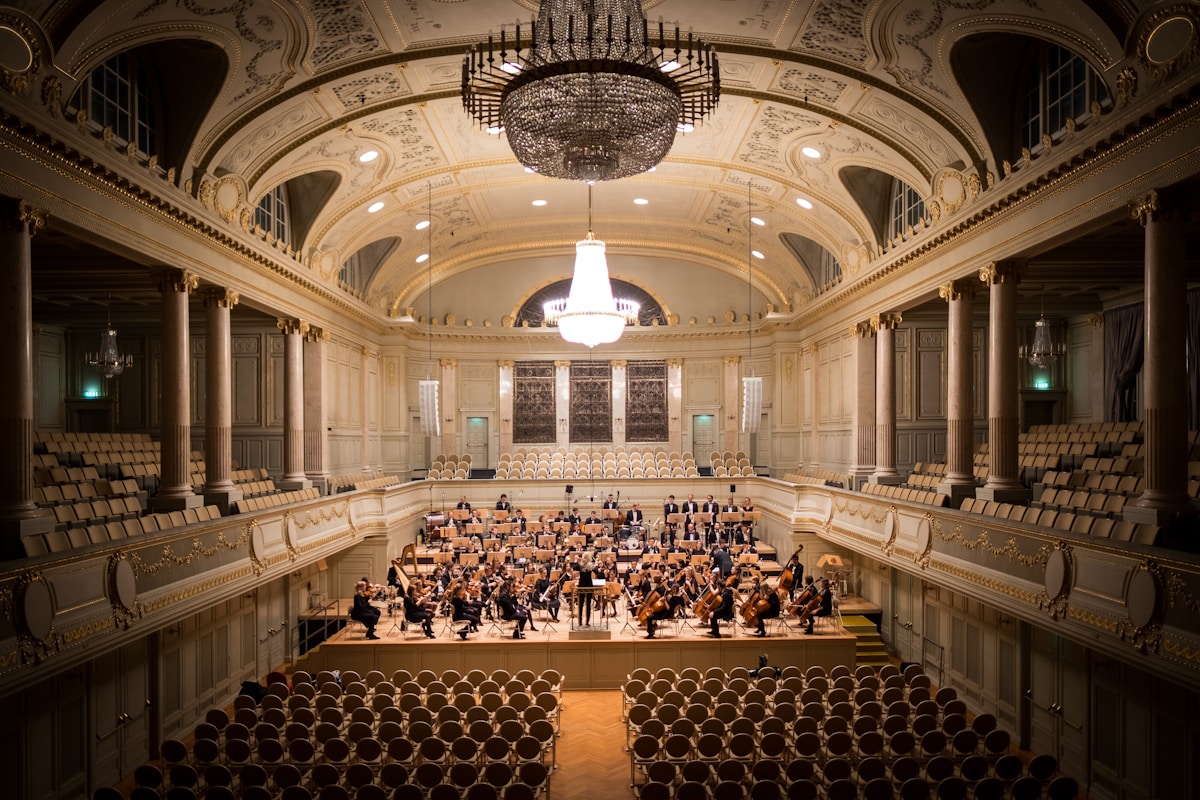
Leading an orchestra requires understanding the unique characteristics of every instrument family and how they interact in ensemble. String bowing decisions shape articulation and phrasing. Wind balance affects tonal color. Percussion integration requires precise timing and dynamic control. The orchestral conductor must think simultaneously as a musician, a listener, and a manager of complex human and acoustical forces.
This track covers the practical realities of orchestral leadership: seating plans, rehearsal order, section rehearsals, dealing with union rules, managing principal players, and the delicate politics of the conductor-orchestra relationship.
- String bowing: down-bow, up-bow, and their musical implications
- Wind and brass balance, intonation, and blend
- Percussion: cueing, balance, and integration with the ensemble
- Large ensemble management: seating, rehearsal order, and pacing
One hundred musicians. One musical vision.
Vocal Leadership
Choral Conducting
Choral conducting requires a fundamentally different skill set from orchestral work. The choral conductor must understand vocal production, breath management, diction in multiple languages, and the unique acoustics of the human voice in ensemble. Text and music are inseparable in choral repertoire — every conducting gesture must serve both the musical line and the meaning of the words.
This track covers the essentials of choral leadership: building choral tone, achieving blend and balance across vocal sections, rehearsal techniques specific to singers, and the conductor's role in shaping vowels, consonants, and the emotional delivery of text.
- Vocal production: supporting healthy singing through conducting gesture
- Text and music: diction, phrasing, and word painting
- Blend and balance: achieving unified choral tone across sections
- Choral warm-ups, sight-reading strategies, and rehearsal techniques
Where text and tone become one voice.

Full Curriculum
What You'll Learn
Six comprehensive modules covering every dimension of conducting — from baton technique to ensemble leadership.
Beat Patterns & Technique
- Conducting patterns: 2, 3, 4, 6, and asymmetric meters
- Preparatory beats, upbeats, and clear entrances
- Cutoffs: fermatas, caesuras, and phrase endings
- Tempo changes: accelerando, ritardando, and subito shifts
Score Study Methodology
- Full score reading with transposing instruments
- Harmonic analysis and formal structure identification
- Inner hearing: developing the ability to audiate the score
- Score reduction and keyboard skills for conductors
Rehearsal Planning & Efficiency
- Rehearsal arc: warm-up, detail work, and run-through
- Error detection: hearing mistakes in real time
- Verbal communication: concise, effective instruction
- Time management and prioritization in limited rehearsal
Orchestral Conducting
- String bowing and articulation decisions
- Wind, brass, and percussion balance and integration
- Orchestral seating and acoustical considerations
- Working with concerto soloists and guest artists
Choral Conducting
- Choral tone production and vocal health awareness
- Diction: IPA, Latin, German, French, and Italian
- Text painting and expressive word delivery
- A cappella conducting and pitch maintenance
Leadership & Communication
- Podium presence and authority without ego
- Giving feedback: positive, specific, and actionable
- Building ensemble culture and shared musical vision
- Program building and concert planning
"A conductor must make music through the hands of others — and that requires equal parts knowledge, empathy, and vision."
— TGC FacultyYour Final Deliverables
Capstone Portfolio
Your capstone demonstrates mastery across conducting technique, score preparation, and rehearsal leadership. You will produce a body of work that proves your readiness to step onto a podium and lead with clarity, musicianship, and authority.
- Conducting video portfolio (recorded conducting sessions demonstrating technique across multiple works)
- Annotated score (fully marked conductor's score with cues, dynamics, and interpretive notes)
- Rehearsal plan (detailed rehearsal schedule for a concert program with pacing and priorities)
- Conducting journal (reflective documentation of your development throughout the program)
- Score reduction (piano reduction of an orchestral movement demonstrating score reading ability)
Certificate & Badges Awarded
Certificate of Completion
Conducting Fundamentals — The Global Conservatory
Digital badges in:
Your 6 Months
The Program Experience
A structured journey from ensemble musician to confident conductor in four intensive phases.
Foundations & Technique
Build your conducting vocabulary. Master basic beat patterns, preparatory gestures, and clear cutoffs. Begin score reading fundamentals and inner hearing development. Months 1–2.
Advanced Technique
Develop left-hand independence, complex meters, and expressive gesture vocabulary. Deep-dive into score study methodology and begin rehearsal technique training. Months 2–3.
Applied Conducting
Study orchestral and choral conducting specializations. Practice error detection, rehearsal planning, and ensemble communication. Conduct peer ensembles in supervised sessions. Months 4–5.
Capstone & Presentation
Complete your conducting portfolio: video recordings, annotated score, rehearsal plan, and conducting journal. Present your capstone to faculty and peers. Months 5–6.
Student Voices
What Graduates Say
Real feedback from musicians who completed the Conducting Fundamentals certificate.
"I came in as a pianist who occasionally directed small ensembles. The score study module alone was worth the entire program — I now hear orchestral scores in my head with a clarity I never thought possible. My rehearsals are twice as efficient."
"The baton technique modules transformed my conducting from flailing arms to clear, musical gestures. My church choir responded immediately — they said it was like having a completely different conductor. The improvement was visible from the first rehearsal."
"What I valued most was the rehearsal craft module. Learning to identify problems quickly, communicate solutions concisely, and manage rehearsal time effectively changed everything. I'm now conducting a community orchestra with genuine confidence."
Questions
Frequently Asked Questions
Your Weekly Learning Rhythm
A structured cadence designed to build mastery through consistent practice, expert feedback, and peer collaboration.
Apply Now
Request Information
Ready to step onto the podium? Complete this form and our admissions team will reach out to discuss the program, assess fit, and answer your questions.
Step Onto the Podium.
Every great conductor started with the decision to lead. Join The Global Conservatory's Conducting Fundamentals certificate and develop the technique, knowledge, and leadership skills to make music through others.
About This Credential
The Global Conservatory issues professional certificates and credentials. TGC certificates are non-degree credentials designed to validate specialized skills and knowledge. They do not represent academic degrees, college credits, or accredited diplomas. For questions about credential recognition, visit our credential verification page.
Start Your Journey
Ready to Enroll?
Submit your interest and our admissions team will contact you with program details, pricing, and next steps.
No commitment required. Financial aid available for qualifying students.