
Audio Engineering& Sound Design
Music Production & Technology · Advanced Program
Master the science and art of professional sound — from acoustic principles to immersive audio design.
The Audio Engineering & Sound Design Certificate at The Global Conservatory is a rigorous, advanced program for those who want to understand sound at its deepest level. This is where physics meets creativity — where the science of acoustics, the craft of microphone technique, and the art of sound design converge into a unified professional discipline.
Over six intensive months, you'll develop the technical foundation and creative instincts that separate working professionals from hobbyists. You'll learn to hear what others miss, solve problems others can't diagnose, and deliver audio that meets the highest industry standards across music, film, games, and immersive media.
The Engineering Mindset
Audio engineering is the invisible foundation of every great recording, every compelling film soundtrack, and every immersive game world. It is the discipline that transforms raw sound into art — the bridge between what a musician plays and what an audience hears.
This program treats engineering with the seriousness it deserves. You won't just learn to push faders — you'll understand why a particular microphone placement captures a violin's resonance, how room acoustics shape perception, and what happens to a signal at every stage from transducer to speaker cone.
Focus Areas
Three Professional Disciplines
Every module builds toward professional competency across three interconnected pillars of audio engineering and sound design.
Studio Engineering
Master signal flow, microphone technique, gain staging, and recording workflows. Learn to capture pristine audio in any environment, from internationally accomplished studios to field recording locations.
Mixing & Processing
Develop deep expertise in analog and digital processing, creative mixing techniques, stem preparation, and delivery formats. Build mixes that translate across every playback system.
Sound Design
Create original sound for film, games, and immersive media. Master Foley recording, synthesis-based design, environmental audio, and interactive sound for games and VR experiences.
Foundation
Acoustics & Monitoring
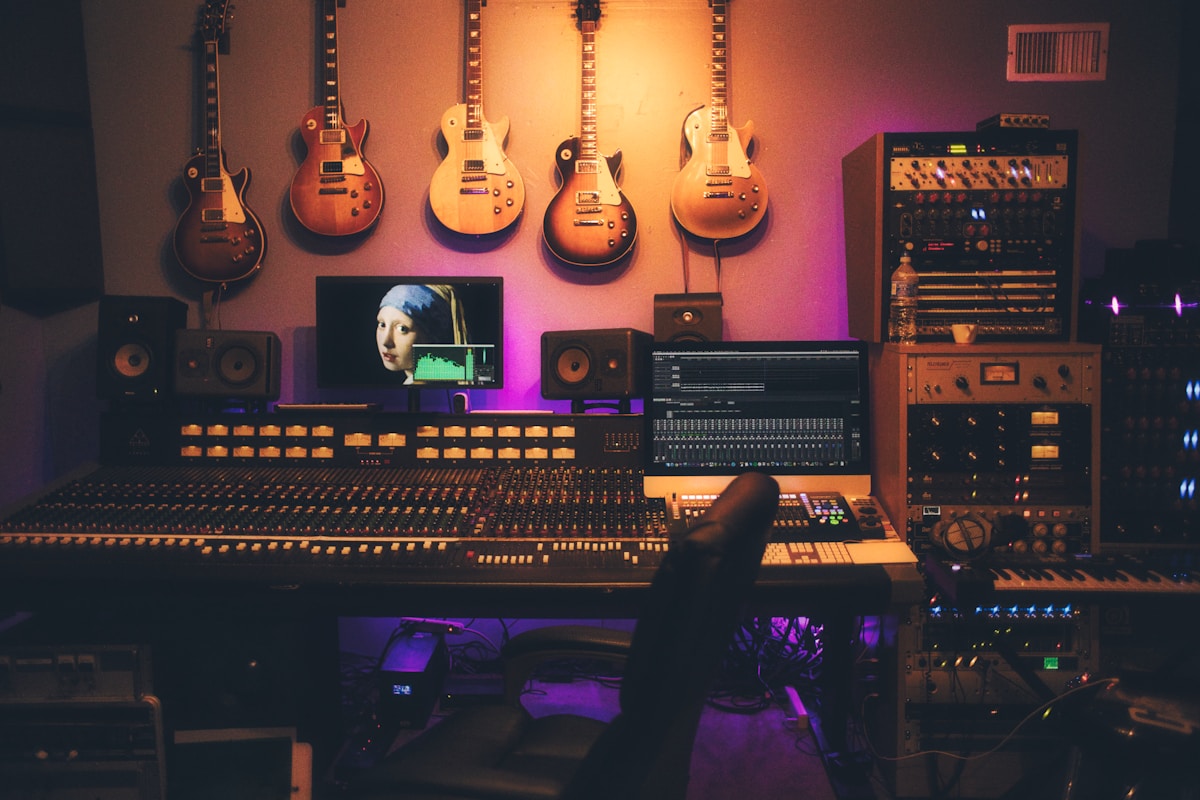
Everything in audio engineering starts with the room you're working in and the speakers you're listening through. This module builds your understanding of room acoustics from first principles — how sound behaves in enclosed spaces, how standing waves and early reflections color your perception, and how to design or treat a room for accurate monitoring. You'll learn speaker placement geometry, calibration procedures, and the critical listening skills that separate engineers who guess from engineers who know.
- Room acoustics: modes, reflections, RT60, and absorption coefficients
- Speaker placement geometry and the listening triangle
- Monitor calibration with SPL meters and measurement microphones
- Acoustic treatment design: absorption, diffusion, and bass trapping
If you can't trust what you hear, you can't engineer what you create.
Core Craft
Microphone Technique
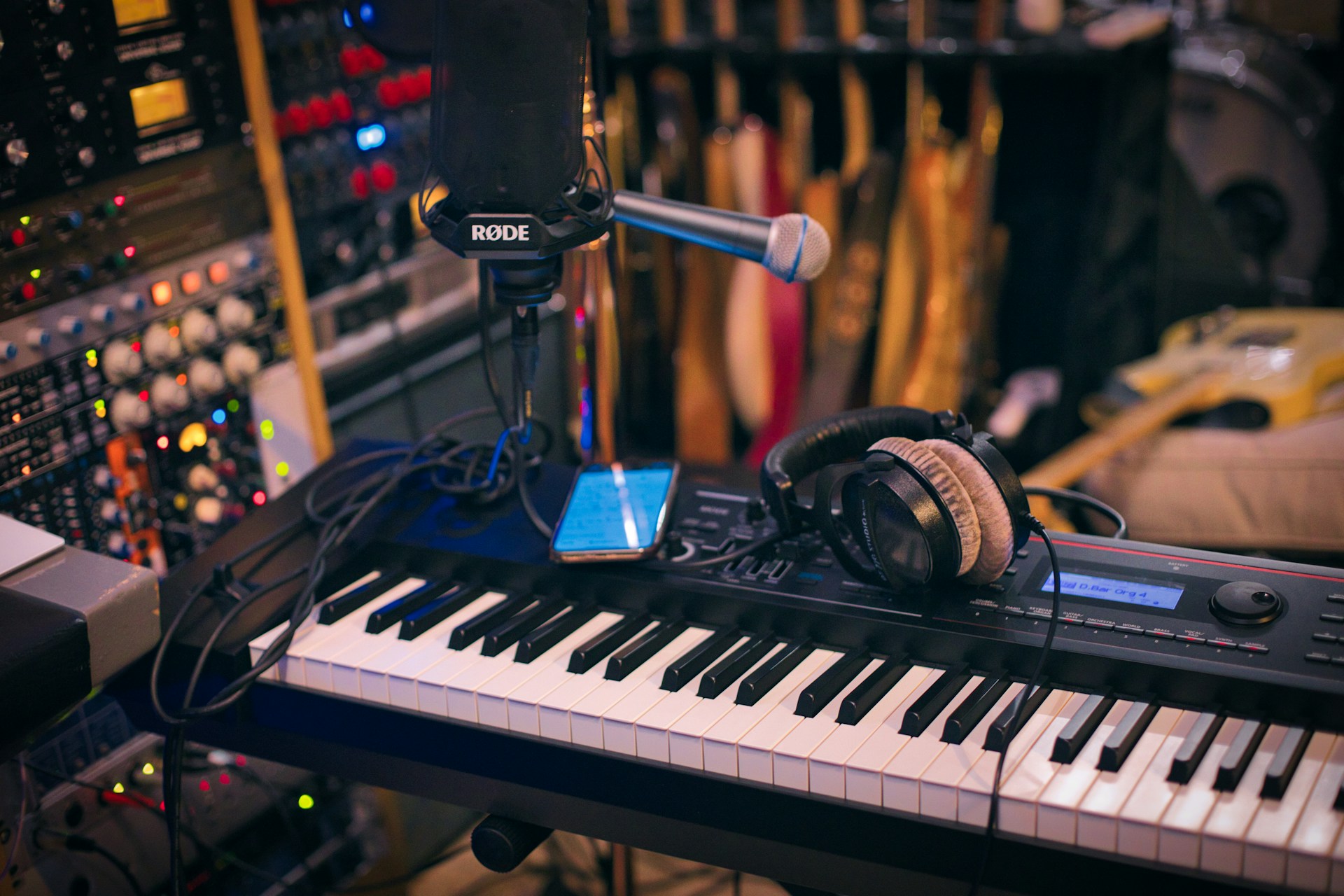
The microphone is the first and most critical link in the audio chain. This module covers every dimension of microphone technology and application — from the physics of transducer types to the art of placement strategies that capture exactly the sound you envision. You'll study condenser, dynamic, and ribbon microphones in depth, master polar patterns and proximity effect, and learn stereo recording techniques including XY, ORTF, Mid-Side, Blumlein, and Decca Tree configurations.
- Transducer types: condenser, dynamic, ribbon — construction and characteristics
- Polar patterns: cardioid, figure-8, omni, and their creative applications
- Stereo techniques: XY, ORTF, Mid-Side, Blumlein, spaced pair, Decca Tree
- Placement strategies for vocals, drums, strings, brass, piano, and ensembles
The right microphone in the right position solves problems that no plugin ever will.
Inspired By Pioneers
The Engineers Who Shaped Sound
These legendary engineers and sound designers didn't just capture audio — they invented new ways of hearing. Their innovations in recording technique, console design, and sonic storytelling inform every module of this certificate.
"All I did was make it possible for people to hear what was really there."— Rupert Neve
George Martin
Music Production
Pioneered studio-as-instrument techniques with The Beatles, transforming recording engineering forever
Sylvia Massy
Rock / Alternative
Unconventional recording pioneer who engineered Tool, System of a Down, and Red Hot Chili Peppers
Alan Parsons
Rock / Progressive
Engineered Dark Side of the Moon and Abbey Road, bridging technical precision with artistic vision
Ben Burtt
Film Sound Design
Created the iconic sound worlds of Star Wars, Indiana Jones, and WALL-E through revolutionary design
Walter Murch
Film Sound / Editing
Invented modern film sound design on Apocalypse Now and coined the term itself
Rupert Neve
Console Design
Designed the analog console circuits that defined the sound of recorded music for generations
Gary Rydstrom
Film Sound Design
Seven-time Academy Award winner for sound design on Jurassic Park, Saving Private Ryan, and Terminator 2
Suzanne Ciani
Electronic / Synthesis
Pioneer of electronic sound design and Buchla synthesis, five-time Grammy-nominated spatial audio composer

Hybrid Workflow
Analog & Digital
The modern audio engineer must be fluent in both analog and digital domains. This module covers the complete signal path from microphone to mix bus, including analog console workflow, analog-to-digital conversion, hybrid setups that combine outboard gear with DAW-based processing, and the science of digital audio at its deepest level. You'll understand sampling theory, dithering, word clock, and the real differences between analog warmth and digital precision — not mythology, but measurable engineering truth.
- Analog console architecture: input channels, buses, auxiliary sends, and master sections
- A/D and D/A conversion: sampling theory, bit depth, jitter, and clock distribution
- Hybrid studio setups: routing outboard processors with DAW recall
- Outboard gear: compressors, EQs, preamps, and their digital modeling counterparts
Master both worlds. Build the hybrid workflow that fits your creative vision.
Creative Design
Sound Design for Media
Sound design is the art of creating audio that doesn't exist yet — building sonic worlds from scratch for film, television, games, and immersive experiences. This module covers the full creative pipeline: Foley recording and editing, synthesis-based sound creation, environmental and ambient design, interactive audio for games, and immersive spatial audio for VR and AR applications. You'll work with industry-standard tools and delivery formats, building a professional sound design reel that demonstrates both technical skill and creative imagination.
- Film sound design: Foley recording, hard effects, ambience, and worldizing
- Game audio: interactive sound systems, middleware (Wwise, FMOD), and adaptive music
- Immersive audio: binaural recording, ambisonics, and spatial rendering for VR/AR
- Synthesis-based design: building sounds from oscillators, samples, and granular techniques
Design the sounds that audiences feel before they hear.

Full Curriculum
What You'll Learn
Six comprehensive modules covering every dimension of professional audio engineering and creative sound design.
Acoustics & Signal Flow
- Room acoustics and acoustic treatment
- Signal flow from source to speaker
- Gain staging and headroom management
- Monitor calibration and critical listening
Microphone Techniques
- Microphone types, construction, and characteristics
- Polar patterns and proximity effect
- Stereo recording configurations
- Instrument-specific placement strategies
Recording Workflows
- Session setup and signal routing
- Tracking procedures and communication
- Overdubbing, comping, and editing
- Remote recording and file management
Analog & Digital Processing
- Console architecture and bus routing
- Hardware processors: EQ, compression, reverb
- A/D conversion and digital audio theory
- Hybrid workflow integration
Creative Sound Design
- Foley recording and hard effects creation
- Synthesis-based sound design techniques
- Environmental and ambient audio design
- Sound design for narrative and emotion
Immersive Audio & Spatial Sound
- Binaural recording and ambisonics
- Dolby Atmos and object-based audio
- Game audio middleware (Wwise, FMOD)
- VR/AR spatial audio implementation
"Sound is the most underestimated force in storytelling. It bypasses the intellect and speaks directly to the body."
— TGC FacultyYour Final Deliverables
Capstone Portfolio
Your capstone demonstrates mastery across all dimensions of audio engineering and sound design. You'll deliver a comprehensive body of work that proves your readiness for professional practice across music, film, and interactive media.
- Recorded album project — multi-track recording engineered and mixed to release quality
- Sound design reel — original sound design for film, animation, or game scenes
- Acoustic analysis report — room measurement, diagnosis, and treatment recommendations
- Studio design proposal — complete studio layout with acoustic treatment and equipment specs
- Mastered portfolio — final mastered versions of all capstone deliverables
Certificate & Badges Awarded
Certificate of Completion
Audio Engineering & Sound Design — The Global Conservatory
Digital badges in:
Your 6 Months
The Program Journey
A rigorous progression from acoustic foundations to professional-level audio engineering and creative sound design.
Foundations
Master acoustics, signal flow, critical listening, and microphone technique. Build the scientific foundation that underpins all professional audio work.
Recording Techniques
Deep-dive into recording workflows, stereo techniques, session management, and the art of capturing pristine audio across instruments and environments.
Mixing & Sound Design
Develop advanced mixing skills across analog and digital domains. Create original sound design for film, games, and immersive media projects.
Capstone & Portfolio
Produce your capstone deliverables across all disciplines. Receive intensive faculty critique. Refine, master, and present your professional portfolio.
Student Voices
What Graduates Say
Real feedback from engineers and designers who completed the Audio Engineering & Sound Design certificate.
"The acoustics module completely changed how I listen. I redesigned my home studio based on what I learned, and the improvement in my mixes was immediate and dramatic."
"I came from a music production background and this program filled every gap in my engineering knowledge. The microphone technique module alone was worth six months of self-study compressed into weeks."
"The sound design for games module opened an entirely new career path for me. I'm now working as a junior audio designer at a game studio, which I never imagined possible six months ago."
Questions
Frequently Asked Questions
Your Weekly Learning Rhythm
A structured cadence designed to build mastery through consistent practice, expert feedback, and peer collaboration.
Apply Now
Request Information
Ready to build your audio engineering career? Complete this form and our admissions team will connect with you to discuss the program, assess fit, and answer your questions.
Engineer Sound. Design Worlds.
Your professional audio engineering career starts here. Join The Global Conservatory's Audio Engineering & Sound Design Certificate and master the science, technology, and artistry of professional sound.
About This Credential
The Global Conservatory issues professional certificates and credentials. TGC certificates are non-degree credentials designed to validate specialized skills and knowledge. They do not represent academic degrees, college credits, or accredited diplomas. For questions about credential recognition, visit our credential verification page.
Start Your Journey
Ready to Enroll?
Submit your interest and our admissions team will contact you with program details, pricing, and next steps.
No commitment required. Financial aid available for qualifying students.