
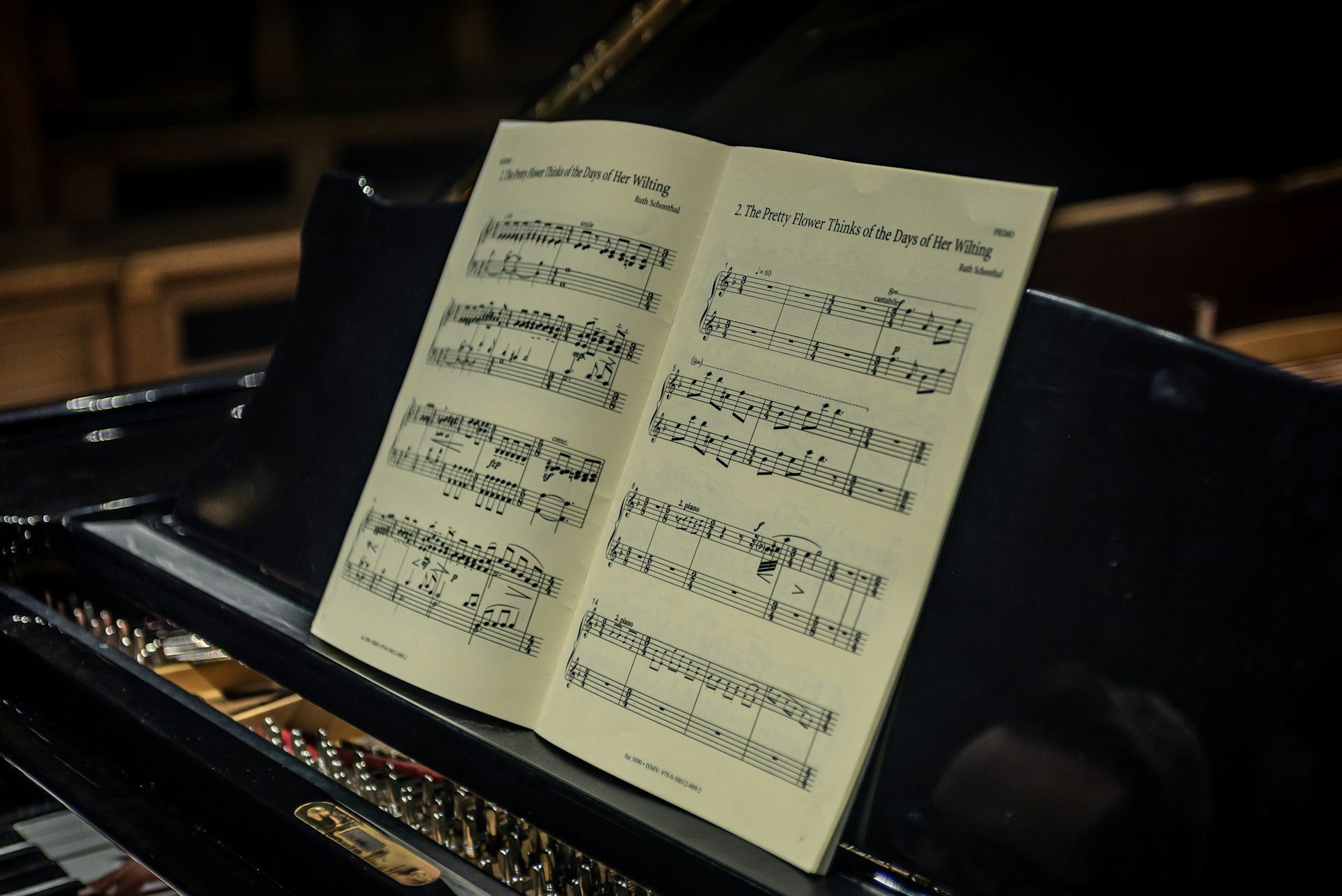
Harmony & Counterpoint
Before you can innovate, you must understand. Before you can lead, you must listen. The tonal universe — mastered step by step, line by line.
Line before chord — this is the music beneath the music
Harmony is the grammar of tonal music — the system of tension and release, expectation and surprise, that gives every phrase its meaning. Counterpoint is older still: the art of independent lines moving together, each voice singing its own song while obeying the deeper logic of the whole.
At The Global Conservatory, we teach both as inseparable disciplines. You cannot write a convincing harmonic progression without understanding voice leading. You cannot construct a fugue without internalizing the rules of dissonance and resolution that govern every note.
This program traces the full arc of Western harmonic practice — from the simplest I–V–I cadence through chromatic modulation, Neapolitan chords, augmented sixths, extended tonality, Impressionism, jazz harmony, and the dissolution of tonality itself in the 20th century.
Harmony is not color. It is grammar. And counterpoint is the architecture that holds grammar in place.
Eight courses from diatonic foundations to jazz harmony
The tonal universe — mastered step by step. Each course builds on the last, creating a complete understanding of how chords function, progress, and transform.
Six courses in the art of independent lines
Counterpoint is the discipline of making multiple voices sing independently while obeying a shared harmonic logic. It predates harmony as we know it — Palestrina wrote counterpoint a century before the concept of “chord progressions” existed.
This sequence moves from the strict species exercises that train voice-leading reflexes, through the modal counterpoint of the Renaissance, the tonal counterpoint of Bach, the construction of fugue, and into the linear thinking of 20th-century masters.
CP 101 — Species Counterpoint I
Note-against-note, 2:1, 4:1, suspensions. Emphasis on control, voice direction, and the discipline of writing within strict constraints.
CP 102 — Species Counterpoint II
Imitative textures, chromatic motion, advanced dissonance treatment. Moving toward free counterpoint.
CP 103 — 16th-Century Counterpoint
Modal counterpoint in the style of Palestrina, Victoria, and Josquin. Cadential structure, modal frameworks, and the aesthetic of Renaissance polyphony.
CP 104 — 18th-Century Counterpoint
Two-voice inventions, canons, invertible counterpoint. The contrapuntal logic of Bach and the Baroque.
CP 105 — Fugue Construction
Subject, countersubject, episode, stretto, augmentation, diminution. The most demanding form in all of music — and the ultimate test of compositional discipline.
CP 106 — Counterpoint in the 20th Century
Hindemith, Bartók, Schoenberg. Linear logic in post-tonal language — how counterpoint survived the death of common-practice tonality.
Three levels of harmony for pre-conservatory students
A conservatory-caliber training program in tonal harmony, voice leading, and part-writing — designed for advanced pre-college students, gap year musicians, or international learners preparing for elite admissions.
From first cadence to first fugue
- Pre-college students preparing harmony and theory entrance exams for Juilliard, Curtis, NEC, Royal Academy, and other elite conservatories
- Performers who want to understand the harmonic architecture of the music they play — not just the notes, but the logic
- Composers and arrangers building fluency in voice leading, chromatic harmony, and contrapuntal technique
- Theory students seeking conservatory-level depth in counterpoint, fugue, and 20th-century analytical methods
- Adult learners returning to serious study who want to build (or rebuild) their harmonic foundation from the ground up
Master the Language of Music
From your first cadence to your first fugue — begin training in harmony and counterpoint with the rigor of an internationally accomplished conservatory.