

Film & GameScoring
Songwriting & Composition Track · Intermediate Program
Compose music that enhances stories across visual media — from dramatic film scores to adaptive game soundtracks.
The Certificate in Film & Game Scoring at The Global Conservatory is an intensive immersion in the art of composing music for moving images and interactive experiences. You will learn to spot a scene, write to picture, build leitmotifs that carry narrative weight, and design adaptive music systems that respond to player action in real time.
From the orchestral grandeur of cinematic blockbusters to the procedural audio of indie games, this program covers the full spectrum of media scoring. Guided by working film composers, game audio directors, and scoring engineers, you will graduate with a professional demo reel and the skills to compete in one of music's most exciting and fastest-growing fields.
Our Approach
Film music is the invisible art. When it works, audiences feel the emotion without consciously hearing the score. When it fails, the entire narrative collapses. We teach you to be the composer who makes directors trust the music — every cue, every transition, every silence.
Game audio is the frontier. Interactive music must respond to unpredictable player behavior in real time, layering, branching, and morphing with every decision. This explosive field demands composers who understand both music and technology — and that intersection is exactly where this program lives.
Focus Areas
Three Core Disciplines
Each track builds toward professional competency in scoring, technology, and industry navigation for visual media composers.
Film Scoring
Spotting sessions, sync points, dramatic scoring, orchestral and electronic hybrid palettes. Master the art of writing music that serves the story.
Game Audio
Adaptive music, middleware (FMOD and Wwise), interactive composition, procedural audio, and dynamic layering systems for player-driven experiences.
Career & Industry
Demo reels, networking strategy, composer agents, guild membership, film festivals, and game jams. Build the professional infrastructure for a scoring career.
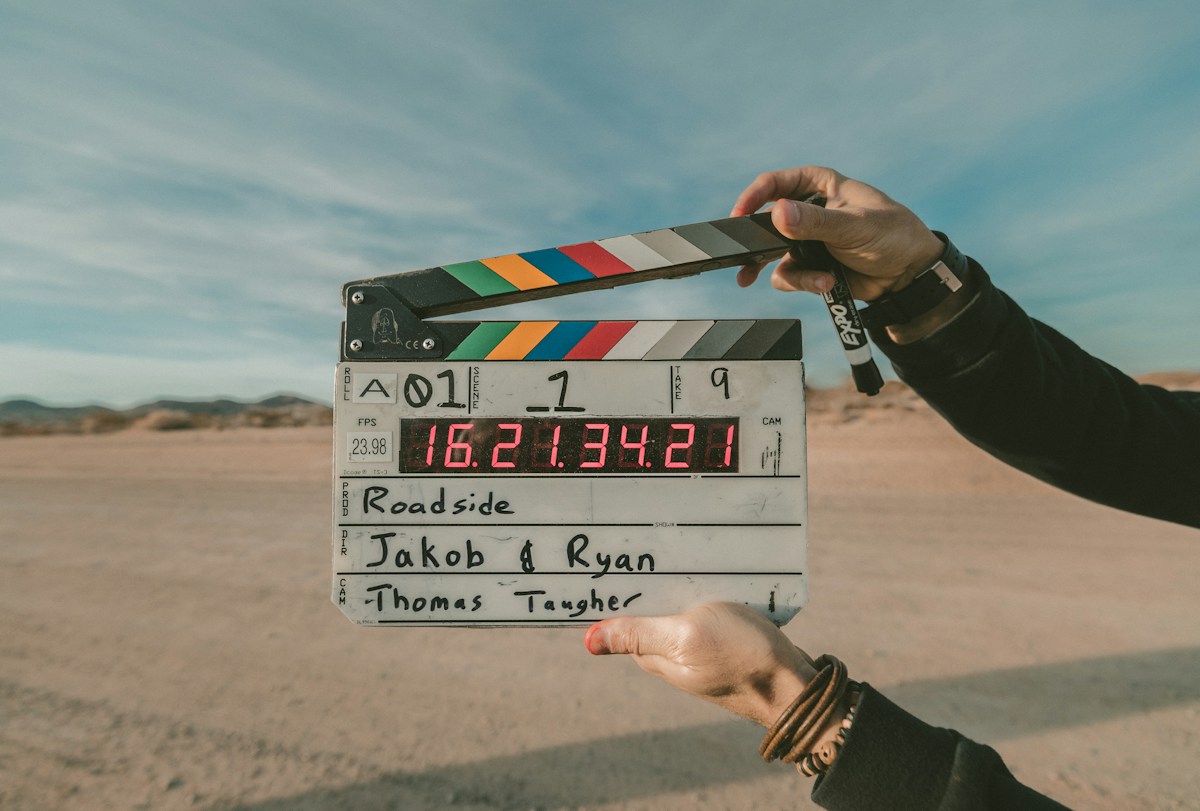
Storytelling Through Sound
Dramatic Scoring
Great film music tells the audience what the characters cannot say. You will learn the foundational techniques of dramatic scoring — leitmotif construction, thematic development, underscoring dialogue, and emotional mapping. Every cue you write will be timed to picture, synced to the frame, and evaluated for its narrative impact.
- Leitmotif design: creating themes that carry character and meaning
- Thematic development: variation, fragmentation, and transformation
- Underscoring: supporting dialogue without competing with it
- Emotional mapping: charting the psychological arc of a scene
The best score is the one the audience feels without hearing.
Precision & Craft
Technical Integration
Scoring to picture demands technical precision. You will master the tools and workflows that professional film composers use daily — from SMPTE timecode to tempo mapping, streamers and punches to click track synchronization. Your music will lock to picture with frame-accurate precision while still sounding organic and musical.
- DAW-to-picture workflow: importing video, setting up scoring sessions
- SMPTE timecode, frame rates, and sync standards
- Tempo mapping: free timing, click tracks, and variable tempo
- Streamers, punches, and visual cueing for recording sessions
Technical mastery frees you to focus on what matters — the music.
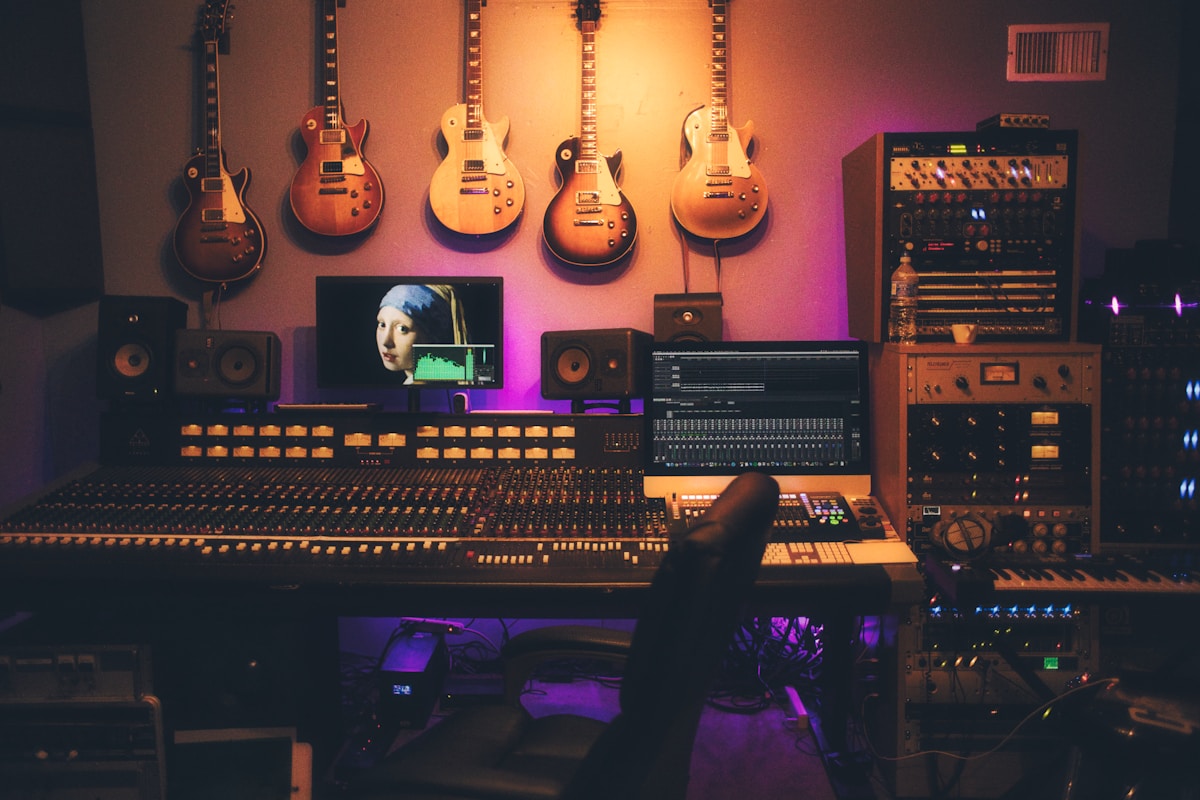
Inspired By Giants
The Composers Who Shaped Visual Media
These legendary scorers defined how audiences experience movies and games. Their innovations in dramatic music, electronic texture, and interactive composition are embedded in every module of this certificate.
"The score is the emotional backbone of the film."— Hans Zimmer
John Williams
Film Scoring
Star Wars, Jaws, Schindler's List — the gold standard of orchestral film music
Hans Zimmer
Film / Electronic Hybrid
Inception, The Dark Knight — redefined the modern blockbuster sound
Hildur Guðnadóttir
Film / Experimental
Joker, Chernobyl — Oscar and Emmy winner, radical sonic textures
Ludwig Göransson
Film / Genre-Blending
Black Panther, Tenet, The Mandalorian — cross-genre innovator
Nobuo Uematsu
Game Audio
Final Fantasy series — pioneered emotional storytelling in game music
Gustavo Santaolalla
Film / World Music
Brokeback Mountain, Babel — minimalist, culturally rooted scoring
Alexandre Desplat
Film Scoring
The Grand Budapest Hotel, The Shape of Water — elegant orchestral craft
Austin Wintory
Game Audio
Journey — first Grammy-nominated game score, adaptive music pioneer

The Interactive Frontier
Adaptive & Interactive Music
Unlike film music, game music must respond to player behavior in real time. You will learn to design adaptive music systems using industry-standard middleware — FMOD and Wwise — and master horizontal and vertical layering techniques that let your music evolve dynamically without breaking musical logic.
- FMOD and Wwise: middleware authoring, events, parameters, and buses
- Horizontal re-sequencing: branching and transitional systems
- Vertical layering: additive and subtractive intensity control
- Stinger systems, ambient loops, and procedural music generation
In games, the player is the conductor — and your music must follow.
Professional Launch
Building Your Scoring Career
Talent alone doesn't build a career in media scoring — strategy does. This module covers the professional infrastructure you need to compete: building a demo reel that directors and audio directors actually watch, networking at film festivals and game jams, working with composer agents, and understanding guild membership and contract basics.
- Demo reel construction: structure, pacing, and presentation
- Networking: film festivals, game jams, composer meetups, online presence
- Composer agents and representation in the industry
- Contract basics, licensing, and royalty structures for media composers
Your career infrastructure is as important as your creative output.

Full Curriculum
What You'll Learn
Six intensive modules covering every dimension of composing for visual media — from dramatic underscore to interactive game audio to career strategy.
Film Scoring Fundamentals
- Spotting sessions and music placement decisions
- Sync points, hit points, and timing techniques
- Genre conventions: drama, horror, comedy, action
- Working with directors and creative briefs
Dramatic & Emotional Scoring
- Leitmotif and thematic architecture
- Tension, release, and pacing in dramatic music
- Underscoring dialogue and narration
- Source music vs. underscore decisions
Game Audio & Adaptive Music
- FMOD and Wwise middleware fundamentals
- Horizontal and vertical layering systems
- Stingers, ambient loops, and dynamic transitions
- Procedural audio and generative music concepts
Orchestral & Electronic Hybrid
- Combining live orchestra with electronic production
- Sample library orchestration for film and games
- Sound design integration with musical scoring
- Modern blockbuster and indie scoring palettes
Technical Workflow & DAW
- Scoring-to-picture setup and session management
- SMPTE, timecode, and frame rate standards
- Mixing and preparing stems for dubbing stages
- Notation, conductor scores, and session preparation
Career Development & Networking
- Demo reel strategy and portfolio curation
- Film festival and game jam participation
- Agent relationships and guild membership
- Contract negotiation and licensing fundamentals
"The audience should never hear the score. They should feel the story."
— TGC FacultyYour Final Deliverables
Capstone Portfolio
Your capstone is a multi-format portfolio demonstrating mastery across film scoring, game audio, and professional presentation. Each project targets a different medium and scoring context — proving your versatility and readiness to work in visual media.
- Scored short film (5–10 minutes) with full sync to picture
- Game level soundtrack with adaptive music implementation
- Orchestral cue demo with virtual orchestra mockup
- Electronic hybrid score for a modern media context
- Professional career portfolio with demo reel
Certificate & Badges Awarded
Certificate of Completion
Film & Game Scoring — The Global Conservatory
Digital badges in:
Your 6 Months
The Program Timeline
A structured journey from scoring fundamentals to professional-grade demo reel in four intensive phases.
Film Scoring Foundations
Spotting, sync, dramatic scoring fundamentals, leitmotif design, and technical workflow with DAW-to-picture. Months 1–2.
Advanced Scoring & Game Audio
Emotional scoring, orchestral-electronic hybrid techniques, FMOD/Wwise middleware, and adaptive music systems. Months 2–3.
Production & Implementation
Scoring a short film, building a game level soundtrack, mixing stems, and preparing professional deliverables. Months 4–5.
Capstone & Career Launch
Complete your capstone portfolio, build your demo reel, develop your networking strategy, and present to industry mentors. Months 5–6.
Student testimonials will be added here once collected from real students. Placeholder removed for pre-launch compliance.
Questions
Frequently Asked Questions
Your Weekly Learning Rhythm
A structured cadence designed to build mastery through consistent practice, expert feedback, and peer collaboration.
Apply Now
Request Information
Ready to compose for film and games? Complete this form and our admissions team will connect with you to discuss the program, assess fit, and answer your questions.
Score the Story.
Every film needs a voice. Every game needs a heartbeat. Join The Global Conservatory's Film & Game Scoring certificate and become the composer who brings visual media to life.
About This Credential
The Global Conservatory issues professional certificates and credentials. TGC certificates are non-degree credentials designed to validate specialized skills and knowledge. They do not represent academic degrees, college credits, or accredited diplomas. For questions about credential recognition, visit our credential verification page.
Start Your Journey
Ready to Enroll?
Submit your interest and our admissions team will contact you with program details, pricing, and next steps.
No commitment required. Financial aid available for qualifying students.