
Ballet & Dance Division
Classical technique, contemporary movement, and the discipline of centuries — brought to a global generation of dancers through elite online coaching, masterclasses, and structured training.
Where centuries of discipline meet a new generation
Ballet is the oldest codified dance form in the Western tradition — born in the Italian Renaissance courts, refined at the Paris Opéra, and carried to the world by the great Russian, British, American, and Danish schools that followed. It is a language of the body that has endured for over four hundred years because it demands, and rewards, nothing less than mastery.
The Ballet & Dance Division at The Global Conservatory brings that tradition online — not as a replacement for the physical studio, but as a professional coaching and training hub that gives dancers access to elite teachers, structured programs, audition preparation, and masterclasses from anywhere on earth.
Whether you are a serious pre-professional teen, a young company dancer seeking outside eyes, an adult returning to the barre after years away, or a singer or actor who needs movement training — this Division was built for you.
Four centuries of discipline, beauty, and transformation
Ballet did not appear suddenly. It was built, generation by generation, by artists who believed that the human body could express what words could not. Understanding their legacy is part of your training.
It began in the courts of Catherine de' Medici in 16th-century France, where dance became spectacle. In 1661, Louis XIV — himself a dancer of consuming ambition — founded the Académie Royale de Danse in Paris, codifying the five positions and establishing ballet as a profession. Under ballet master Pierre Beauchamp and later Jean-Georges Noverre, ballet evolved from courtly entertainment into dramatic art.
The 19th century brought the Romantic era: ethereal white tutus, pointe work, and the idea that a dancer could appear to defy gravity itself. Marie Taglioni in La Sylphide (1832) and Carlotta Grisi in Giselle (1841) created images that still define the art form.
Then came Russia. Marius Petipa, a Frenchman working in St. Petersburg, choreographed the greatest classical ballets ever made — Swan Lake, The Sleeping Beauty, The Nutcracker — with Tchaikovsky's scores elevating ballet to its highest expressive power. The Mariinsky Theatre became the centre of the ballet world.
Classical ballet is not an old art — it is the most demanding physical and artistic discipline human beings have ever devised for the stage. Every generation reinvents it. The tradition
In the 20th century, Sergei Diaghilev's Ballets Russes exploded convention. Vaslav Nijinsky, Anna Pavlova, Michel Fokine, and later George Balanchine carried Russian training to Europe and America. Balanchine's New York City Ballet reimagined classical technique for the modern age — fast, musical, stripped of excess.
In Britain, Ninette de Valois and Frederick Ashton built the Royal Ballet. In Denmark, August Bournonville's legacy endured. In America, Jerome Robbins brought ballet to Broadway and film. Rudolf Nureyev's defection from the Soviet Union in 1961 made ballet front-page news worldwide — and his partnership with Margot Fonteyn at the Royal Ballet became the most celebrated in history.
Today, companies like the Paris Opéra Ballet, the Bolshoi, the Royal Ballet, American Ballet Theatre, and San Francisco Ballet continue to push the form forward — alongside contemporary choreographers like William Forsythe, Crystal Pite, Wayne McGregor, and Justin Peck, who are inventing what ballet will become next.
This is the lineage you join when you train. Even online, even from your living room — you are part of four hundred years of relentless refinement.
Artists who shaped what ballet is
Every position, every arabesque, every grand allegro carries the DNA of the artists who came before. These are some of the figures whose legacy is woven into every class you'll ever take.
Institutions that carry the tradition
Ballet lives in its companies and schools. These are the houses that have shaped — and continue to shape — the art form. Our faculty come from major companies around the world, and our training reflects those standards.
What you can study in Ballet & Dance
Within the Division, students can focus on one area or combine several. Each is available through private lessons, group classes, masterclasses, and intensive programs.
Four ways to train in Ballet & Dance
Every area of study is accessible through these four formats. Most serious students combine at least two.
One-to-one online coaching in technique, pointe, variations, contemporary, conditioning, adult ballet, and audition prep.
Explore → 02 Pathway TwoSmall-group technique and repertory classes — weekly barre and center work, contemporary studios, conditioning.
Explore → 03 Pathway ThreeHigh-level events with leading artists: variation masterclasses, technical clinics, and anatomy sessions.
Explore → 04 Pathway FourStructured programs for summer intensives, company auditions, competition video submissions, and school applications.
Explore →The foundation of every pathway
Regardless of which pathway you choose, the Ballet & Dance Division is built on six pillars that run through everything we teach.
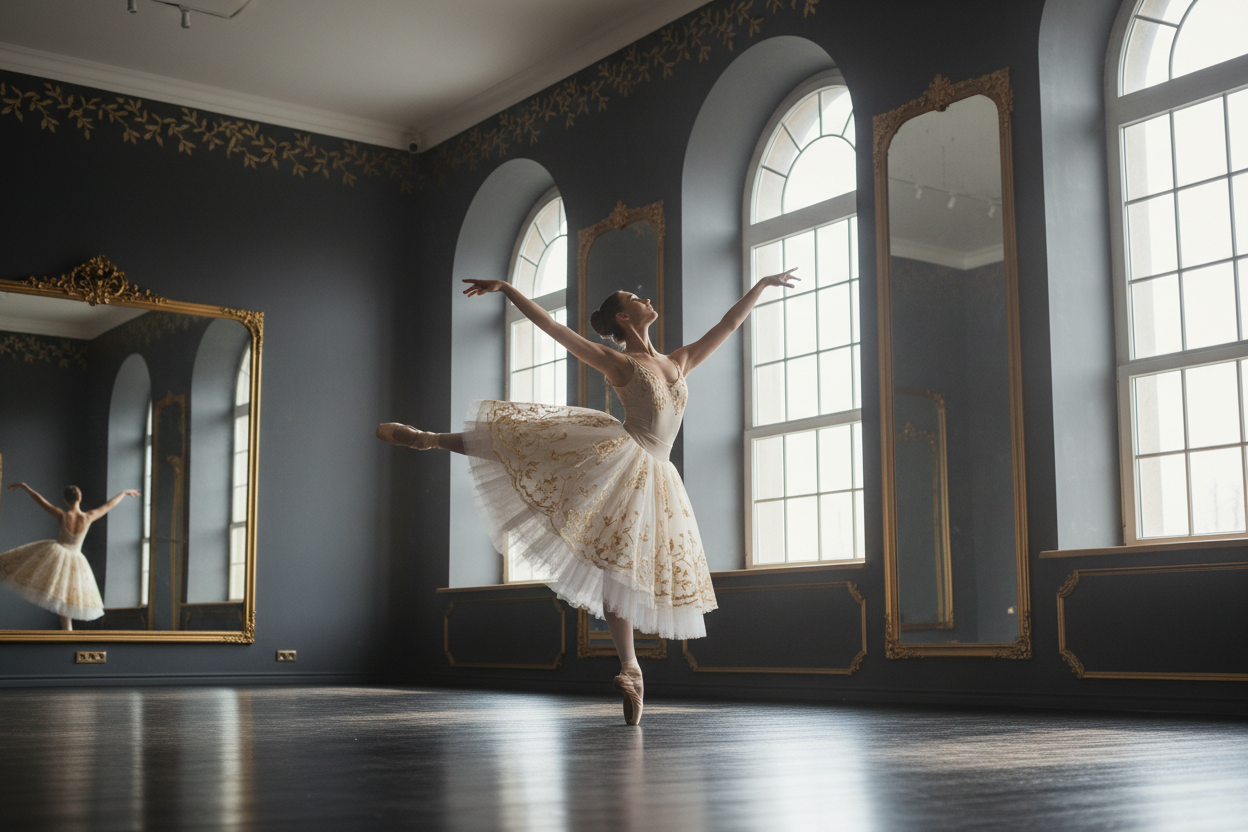
Dancers at every stage
- Serious youth and teens already training regularly at a local studio or school, looking for elite supplemental coaching and audition prep
- Pre-professional and young professional dancers who want outside eyes, refinement, and targeted support from global faculty
- Adult dancers — beginners, returners, intermediate and advanced — who want structured, respectful training and coaching
- Performers from other disciplines — singers, actors, instrumentalists — who need ballet-based movement and stage presence training
We expect students to be serious, respectful, and ready to work — even if they are beginners. Commitment matters more than current level.
How study works in Ballet & Dance
How Ballet connects to the rest of The Global Conservatory
The Ballet & Dance Division is designed to connect with every other part of the institution.
- The Drama Division and Musical Theatre Program — for dance combined with acting and singing
- The Opera & Vocal Division — movement, posture, and stage presence for singers
- The Orchestral & Composition Divisions — collaborations on ballets, new works, and performance projects
Students can move between divisions and build a genuinely multi-disciplinary training plan. A dancer who also sings, an actor who needs movement work, a composer who wants to write for dance — all of these paths are possible here.
What it means to train here
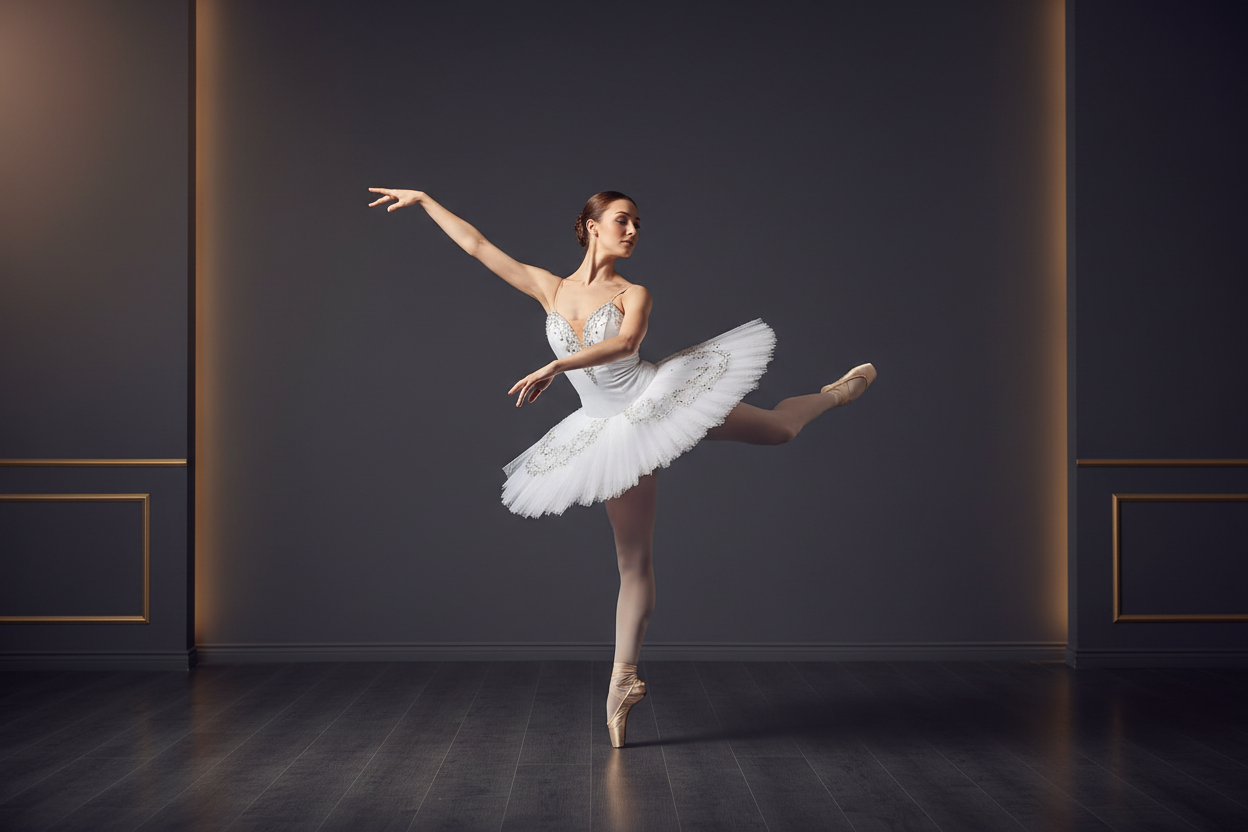
To study ballet is to enter a conversation that began centuries ago — and to accept the responsibility of carrying it forward. The barre is the same. The mirror is the same. The demand for truth in every movement is the same. Only the walls have changed. The Global Conservatory
We are not a substitute for your physical studio. We are the additional layer — the coaching, the refinement, the outside eye, the preparation for the highest-stakes moments in your career. We exist so that no serious dancer is limited by geography.
From the courts of Versailles to the stages of Lincoln Center, from the Mariinsky to your living room — the lineage is unbroken. And you are part of it now.
Begin in the Ballet & Dance Division
Most dancers start with a private lesson to receive individual corrections and a clear plan — or a masterclass to feel the level and expectations. From there, studios and programs follow naturally.