
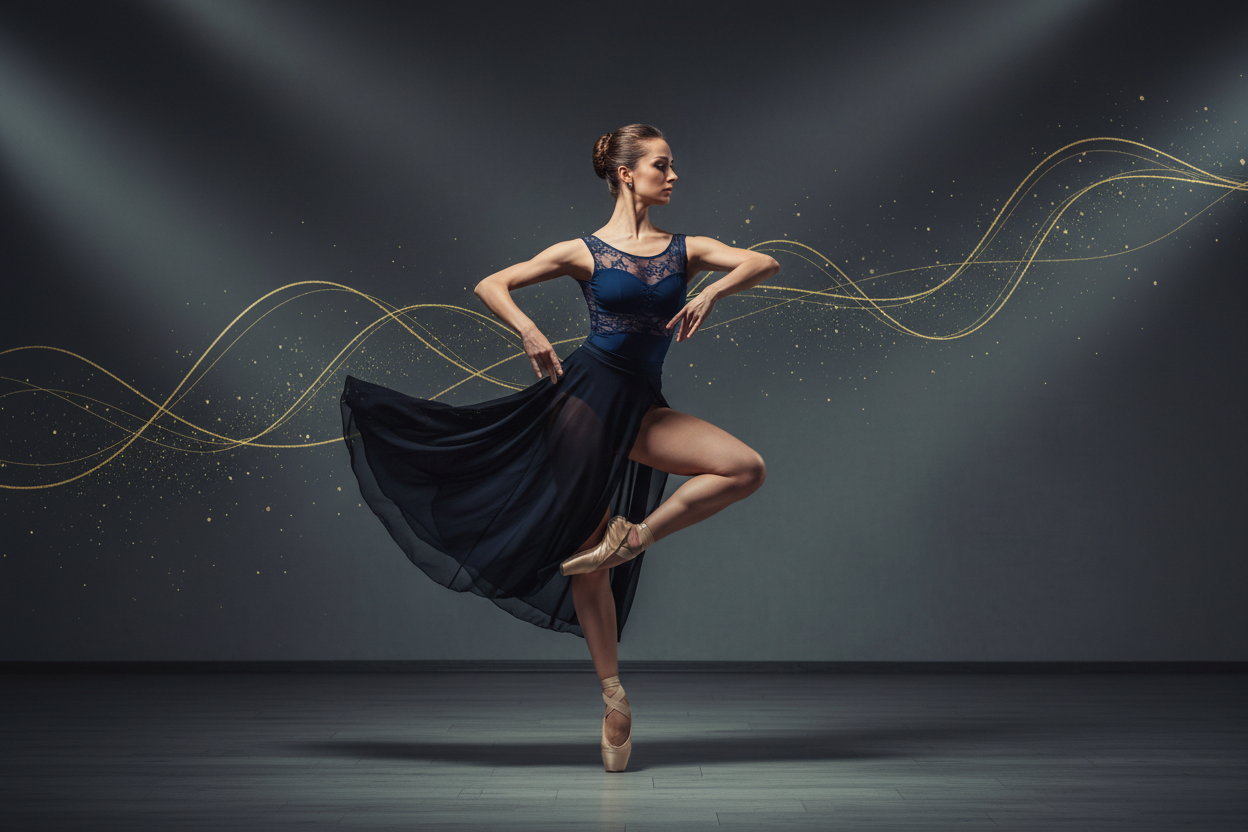
Auditions & Intensive Prep
Goal-driven preparation for summer intensive auditions, ballet school admissions, company auditions, competition video submissions, and scholarship applications — coached by faculty who have sat on both sides of the panel.
An audition is not a test — it is a performance of readiness
The audition room is where years of training compress into minutes. A summer intensive audition at the School of American Ballet. A company class at American Ballet Theatre. A video submission for the Prix de Lausanne. A live panel for the Royal Ballet School. These moments are not about perfection — they are about showing the panel who you are as a dancer, right now.
The Ballet & Dance Division's audition and intensive prep programs are designed to make those minutes count. You work with faculty who have sat on audition panels, who have coached dancers into top programs, and who understand the difference between a dancer who is technically ready and a dancer who walks into the room prepared.
Preparation is not just about polishing your variation. It is about understanding what the panel is looking for, how to present yourself in a group class, how to manage nerves, and how to make a video submission that stands out from hundreds.
The qualities that separate acceptance from rejection
Audition panels at elite programs see hundreds of dancers. Technical ability is the baseline — it gets you in the room. What separates the accepted from the waitlisted is a combination of qualities that cannot be faked but can be developed.
- Musicality. Not just dancing on the beat — dancing with the music. Phrasing, breath, dynamic contrast.
- Line and proportion. How your body creates shape in space. Panels assess this within seconds.
- Movement quality. Weight, attack, flow. Are you dancing or just executing steps?
- Presence and focus. Can you hold a room? Do you project beyond the mirror?
- Correction speed. In a group audition class, how quickly do you absorb and apply new material?
- Physical readiness. Alignment, strength, turnout, flexibility — not as abstract concepts, but as visible qualities in motion.
- Professionalism. How you enter the room, how you stand during combinations, how you respond to correction.
We can teach technique. What we are looking for in an audition is the artist inside the dancer — someone who listens, adapts, and moves with intention.Audition panel perspective
Six audition & intensive prep pathways
Every dancer’s audition goal is different. Our prep programs are structured around the specific type of audition you are facing.
Targeted preparation for SAB, ABT, Joffrey, Houston Ballet, Pacific Northwest Ballet, Boston Ballet, San Francisco Ballet, and international summer programs. Class etiquette, variation coaching, video submissions.
Ages: 11–18 · Timeline: 8–16 weeks before audition season · Format: Private + group
Full-year or year-round admissions to residential ballet schools: Royal Ballet School, Paris Opéra School, John Cranko Schule, Vaganova Academy, National Ballet School of Canada, Australian Ballet School.
Ages: 10–18 · Timeline: 3–12 months · Format: Private coaching + mock panels
Preparation for professional company auditions and open calls. Company class protocol, variation selection, résumé and reel preparation, class comportment, and recovery between auditions.
Ages: 17+ · Timeline: Ongoing or 4–8 weeks · Format: Private coaching
Variation coaching, video filming strategy, and performance quality for YAGP, Prix de Lausanne, World Ballet Competition, ADC/IBC, and regional competitions and festivals.
Ages: 10–22 · Timeline: 4–12 weeks · Format: Private variation coaching
Dedicated coaching for dancers submitting video auditions. Filming angles, class presentation on camera, variation filming strategy, editing guidance, and what panels actually look at in a video.
Format: 2–4 private sessions · Includes: Review of filmed footage before submission
Guidance on scholarship applications, personal statements, recommendation letter strategy, and portfolio preparation. Many top programs offer significant financial aid — preparation makes the difference.
Format: Private advising sessions · Includes: Statement review, timeline planning
What preparation actually involves
- Technical assessment. Faculty evaluate your current level and identify the gaps between where you are and what your target programs expect.
- Variation selection and coaching. Choosing the right solo for your body, your level, and the panel’s expectations — then polishing it to performance standard.
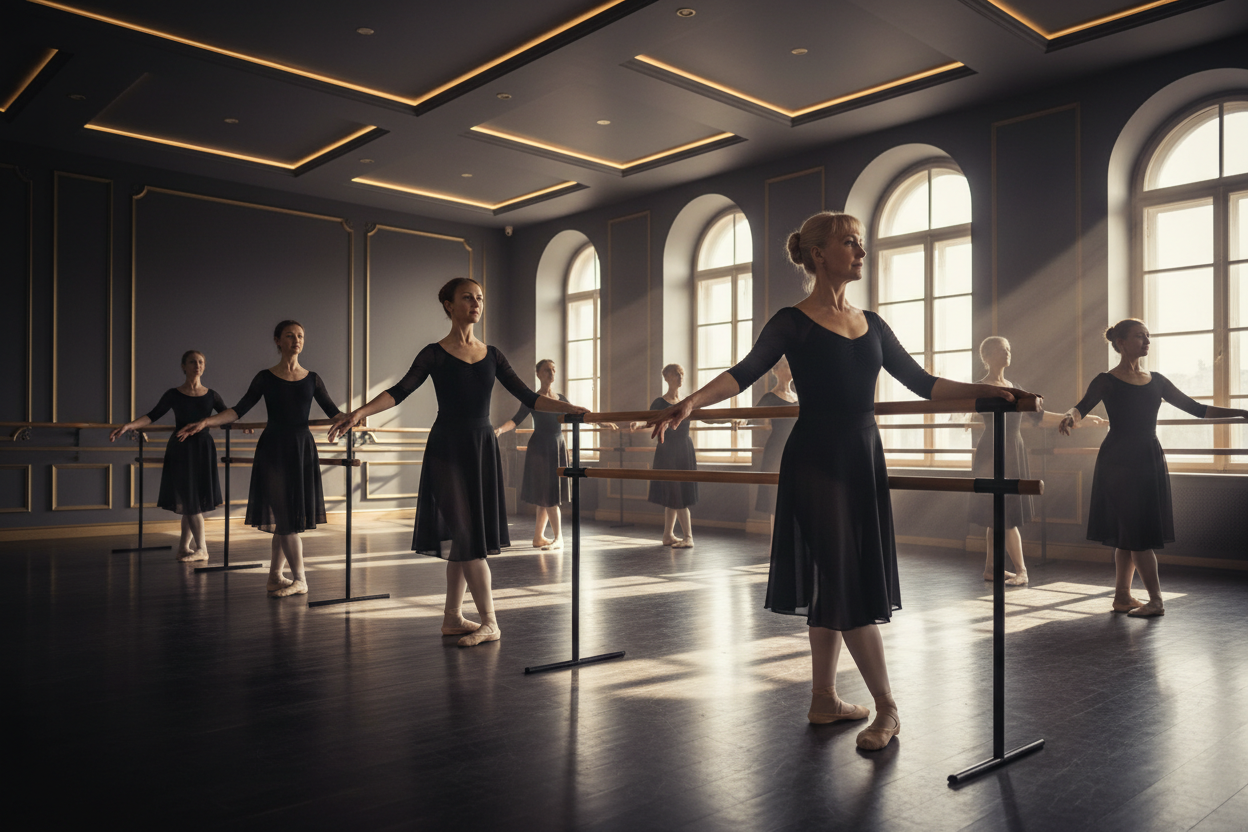
- Class simulation. Practicing the audition class format — picking up combinations quickly, showing correction speed, maintaining composure.
- Video review. Recording yourself, watching with your teacher, identifying what the camera sees that the mirror misses.
- Mindset coaching. Managing performance anxiety, building confidence, and developing the focus that carries you through a long audition day.
- Application strategy. Which programs to apply to, how to sequence auditions, how to manage the emotional weight of the season.
From goal to audition day
Audition prep does not exist in isolation
The dancers who succeed in auditions are the ones who have built a broad foundation before audition season begins. The months of private lessons that fixed your alignment. The group classes that taught you to learn quickly in a room full of other dancers. The masterclass where a guest artist showed you what professional-level artistry actually looks like.
- Private lessons build the technique that audition panels assess in seconds
- Classes & studios train you to perform in the group audition class format
- Masterclasses expose you to the level of artistry that top programs expect
- Audition prep focuses all of that work into the specific moments that determine your path
An audition is won in the months before you walk through the door. The day itself is simply the moment where preparation meets opportunity.The Global Conservatory
Audition prep works best when it's built on the rest of the Division.
Start Preparing
Browse audition prep programs or book a private lesson with a faculty member who specializes in audition coaching. The earlier you start, the stronger your application.