
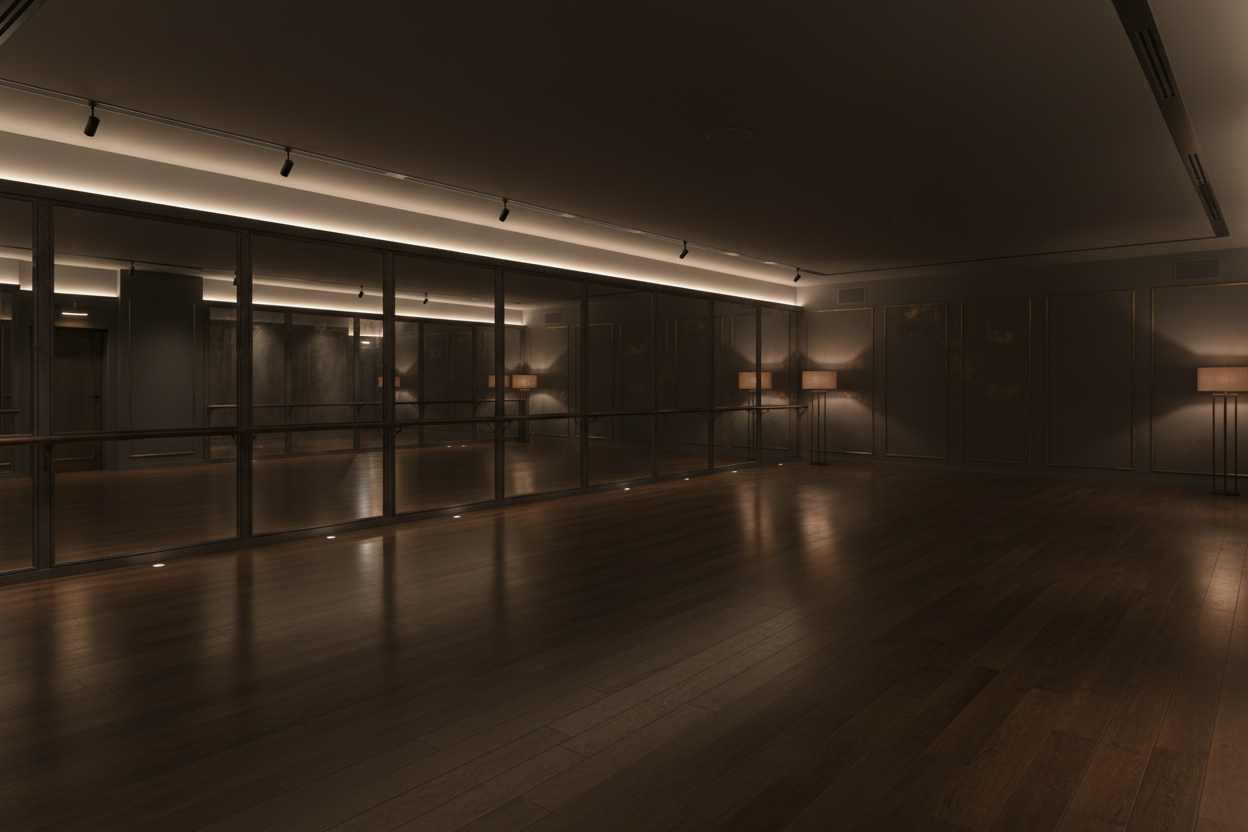
Ballet Classes & Studios
Small-group technique and repertory classes — weekly barre and center work, contemporary studios, conditioning, and adult ballet — structured like the world's great ballet schools.
Where individual technique meets the discipline of the ensemble
In every great ballet school, the group class is sacred. It is where dancers learn to work in unison, to hold a line, to feel the rhythm of a room, and to measure themselves against their peers. The barre is a shared ritual. The center is a shared test. The energy of the group pushes every individual beyond what they could achieve alone.
The Ballet & Dance Division's classes and studios bring this collective discipline online — with capped enrollment, fixed schedules, and faculty who know every dancer by name. These are not open drop-in classes. They are structured, progressive studios where technique builds week over week.
Pair them with private lessons for the complete conservatory experience — the group class provides structure and accountability, while the private lesson provides individual correction.
Why the group class matters
A private lesson can fix your pirouette. But a group class teaches you to pirouette while someone is turning beside you — to hold your preparation while the music pulses, to finish cleanly when the room is watching, to recover from a fall without breaking the line.
In classical ballet, the daily class has been the backbone of training since the Académie Royale de Danse in 1661. Every professional company begins the day with company class. Every school — from the Vaganova Academy to the School of American Ballet — is built on the group lesson. It is where vocabulary becomes language, and repetition becomes art.
The class is not just where you learn steps. It is where you learn how to be a dancer — in the company of other dancers, under the eye of a master teacher, to the count of a pianist.The classical tradition
Our online studios replicate this tradition with small groups, fixed enrollment, and progressive difficulty. You will be seen. You will be corrected. You will be expected to show up.
From Beauchamp to Balanchine: the evolution of the ballet class
The structure of the ballet class — barre, center, adagio, allegro, révérence — was codified in the French court and has survived nearly unchanged for centuries. Pierre Beauchamp established the five positions. Carlo Blasis systematized training in the early 19th century. Enrico Cecchetti assigned specific exercises to each day of the week. Agrippina Vaganova built the progressive syllabus that Russia still follows.
In the 20th century, George Balanchine at the School of American Ballet stripped the class to its essentials — speed, musicality, attack. The Royal Academy of Dance in London created graded examinations that spread structured training worldwide. August Bournonville's classes in Copenhagen preserved a lightness and ballon that no other tradition quite matches.
Every class you take in this Division carries the DNA of these traditions. Your teacher will draw from whichever school serves you best — but the structure, the discipline, and the demand for excellence are universal.
Seven categories of group training
Every class in the Ballet & Dance Division falls into one of these categories. Classes are tagged by category, level (Foundation / Intermediate / Advanced / Professional), and age group.
Progressive group classes covering barre, center, adagio, allegro, and révérence. Levels from Foundation through Advanced/Professional. Drawing from Vaganova, Cecchetti, RAD, and Balanchine traditions.
Small-group pointe work as supplemental training alongside in-person studio classes. Strength-building exercises, relevé and balance work, and pre-pointe conditioning for dancers approaching readiness.
Contemporary technique and choreography for ballet dancers expanding their range. Release technique, floor work, improvisation, and cross-training in modern vocabularies. Essential for contemporary company auditions.
Group coaching on classical and contemporary solo variations. Students learn and perform variations in a supportive studio environment with faculty feedback. Preparation for competitions, exams, and auditions.
Structured, respectful group classes for adult beginners, returners, and intermediate/advanced adult dancers. Correct technique from the ground up, safe progression, genuine musicality. No patronizing, no shortcuts.
Group conditioning classes focused on turnout, core, flexibility, foot and ankle strength, and injury prevention. Drawing from Pilates for dancers, sports science, and physiotherapy principles.
Ballet-based movement classes for singers, actors, instrumentalists, and musical theatre artists. Posture, carriage, spatial awareness, and physical confidence. No ballet background required.
How the studios are built
Every class follows the same conservatory principles: small groups, fixed schedules, rising expectations, and faculty who know your name.
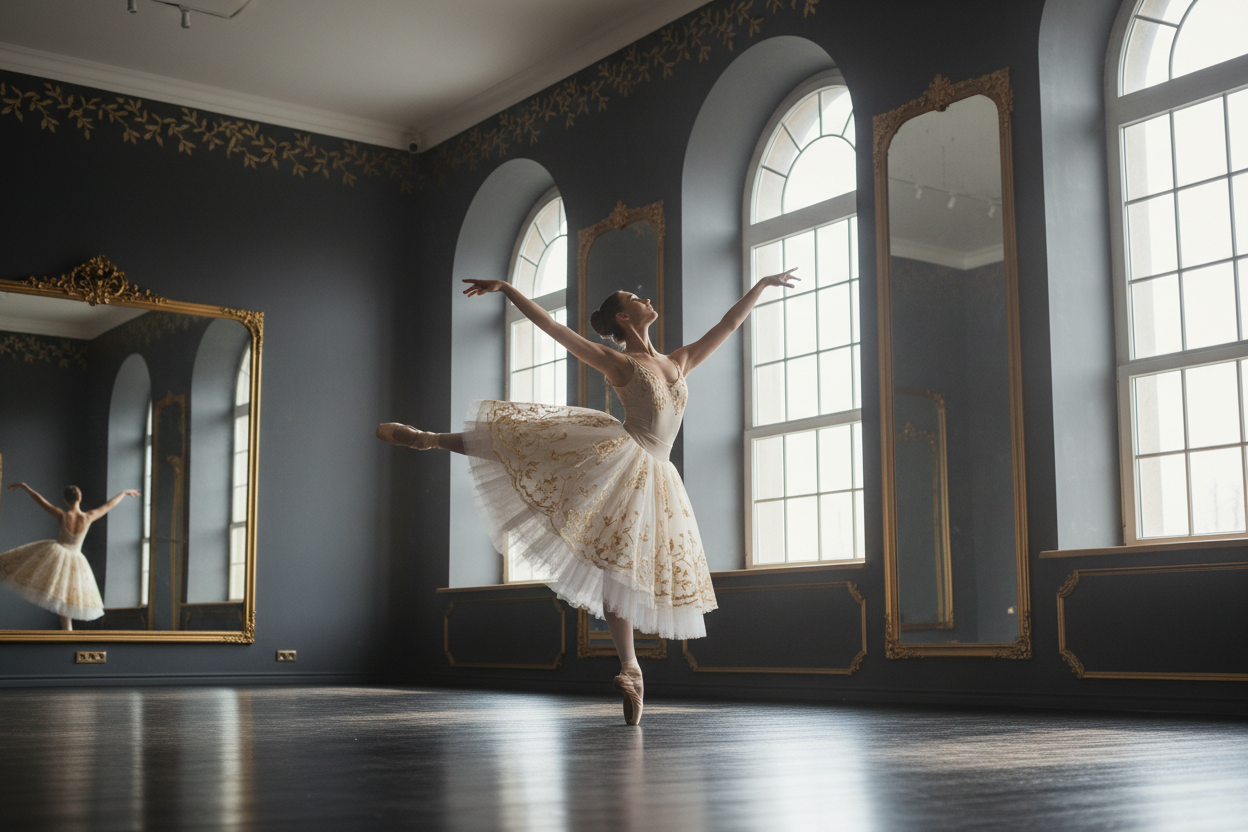
What a typical studio session looks like
- Barre exercises with progressive complexity
- Center work — adagio, pirouettes, petit allegro
- Grand allegro and diagonal combinations
- Individual corrections from faculty throughout
- Révérence to close with discipline and respect
- Weekly homework or practice notes from your teacher
From enrollment to ongoing training
How classes & studios connect to the rest of your training
Group classes provide structure and accountability. Private lessons provide individual correction. Masterclasses provide high-level exposure to exceptional artists. Audition programs provide goal-driven preparation.
The strongest training combines all four. Your faculty and advisors can help you build a schedule that covers technique, conditioning, repertoire, and preparation — all within the Ballet & Dance Division.
The great dancers of every generation trained in group classes first. Individual brilliance is built on collective discipline.The conservatory model
Classes work best alongside the rest of the Division.
Find Your Class
Browse current ballet classes by level, category, and schedule. Enrollment is capped — every dancer gets individual attention.