Neural Audio Synthesis
Understand how neural networks learn to generate audio. Work with models trained on different sound sources to create new timbres.

NextGen Music & AI — Sound Design & Neural Synthesis
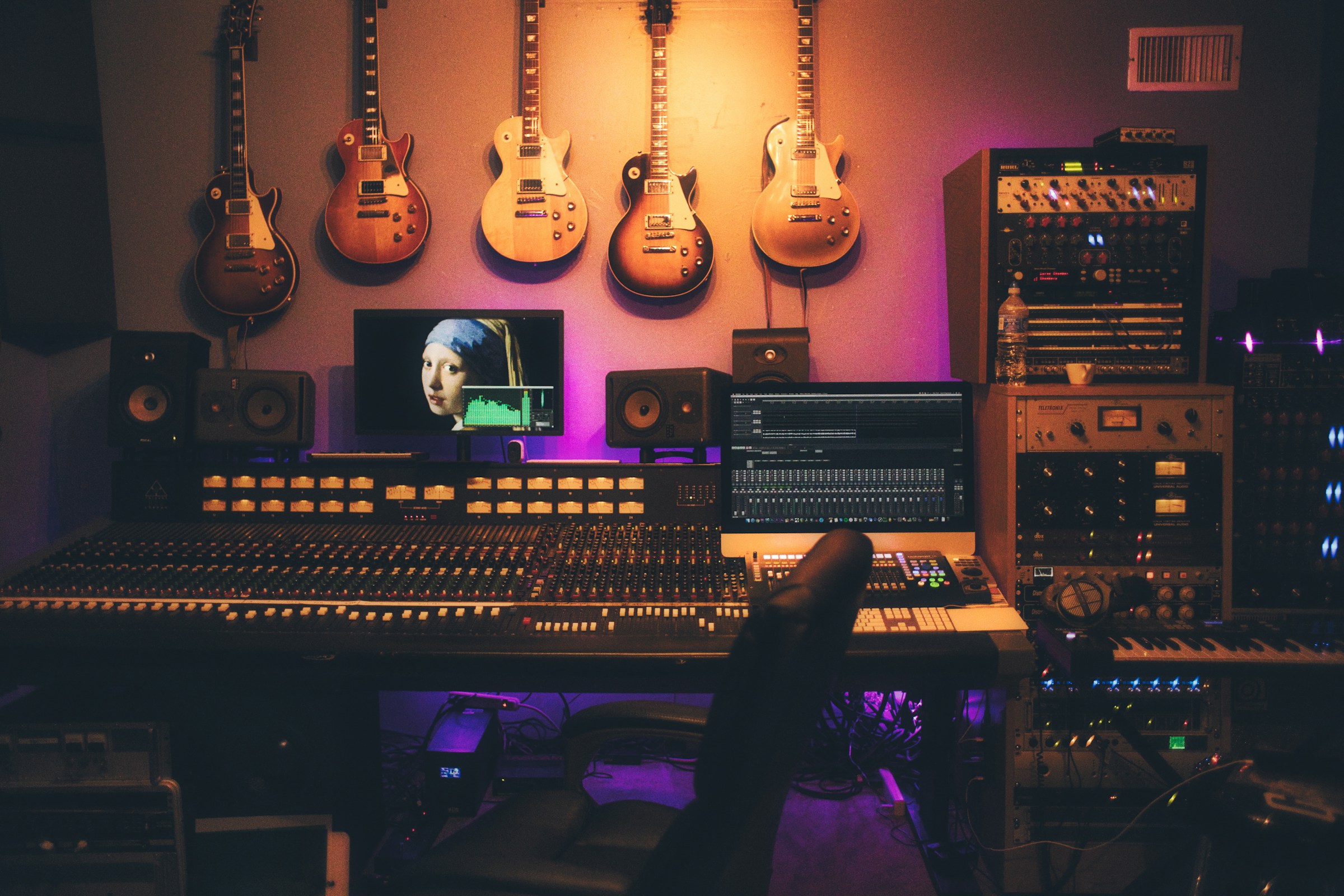
Create sounds that have never existed before. Explore neural audio synthesis, timbre transfer, generative textures, and AI-driven approaches to sonic creation.
Traditional synthesizers work with oscillators, filters, and envelopes — building blocks that have shaped electronic music for decades. Neural synthesis works differently: it learns from audio itself, creating models that can generate entirely new sounds.
This course explores the new sonic territory AI makes possible: transferring timbres between instruments, morphing between sound sources, generating textures no algorithm could specify, and designing sounds that exist between categories.
The goal: Expand your sonic palette with tools that create sounds impossible through conventional means.
Techniques for creating sounds that push beyond conventional synthesis.
Understand how neural networks learn to generate audio. Work with models trained on different sound sources to create new timbres.
Apply the sonic character of one instrument to another. Make a violin sound like a synthesizer, or a voice like a flute.
Create smooth transitions between different sounds. Blend acoustic sources with synthetic textures for hybrid timbres.
Create evolving sonic environments that generate themselves. Design systems that produce endlessly varying atmospheric sounds.
Explore the mathematical spaces where neural models represent sound. Navigate between timbres to find sounds no one has heard before.
Train your own neural synthesis models on custom datasets. Create personalized instruments that embody your unique sonic vision.
A creative workflow for designing sounds with neural synthesis tools.
Choose your starting materials: existing sounds, recordings, or datasets that will inform the neural model's output.
Explore what the model can do. Navigate parameter spaces, test transformations, and discover unexpected sonic territories.
Process and edit the generated audio. Combine neural outputs with traditional synthesis and effects for final sounds.
Bring your new sounds into musical context. Build instruments, design presets, and incorporate into production workflows.
Neural synthesis doesn't replace the sound designer's ear — it gives that ear access to sounds it could never reach before.
Neural audio tools and environments for next-generation sound design.
Neural synthesis treats sound as a material to be shaped, not just a signal to be processed. Instead of building sounds from components, you explore a continuous space of possible timbres.
This changes the designer's role: less architect, more explorer. You're not constructing sounds from first principles — you're navigating territories of sonic possibility that neural models have mapped.
Neural models learn from what they hear. Understanding where training data comes from — and using ethically sourced material — is part of responsible practice.
AI can generate endless variations, but your ears decide what's musically valuable. Develop your listening skills alongside your technical ones.
Hands-on projects that develop neural sound design skills.
Transfer the sonic character of one instrument to another. Create a library of hybrid sounds that blend acoustic and electronic sources.
Build a playable instrument that morphs between different sound sources. Control the blend in real time for expressive performance.
Design a system that generates endless evolving textures. Create ambient soundscapes that never repeat while maintaining sonic coherence.
Navigate a neural model's latent space to discover new timbres. Map interesting regions and create a library of never-before-heard sounds.
Train a neural synthesis model on your own curated dataset. Create a unique instrument that embodies your personal sonic aesthetic.
Apply neural synthesis to create otherworldly sounds for visual media. Design creatures, environments, and effects impossible through traditional methods.
Sound designers seeking new techniques for film, games, and media production
Electronic musicians wanting to expand their sonic palette beyond traditional synthesis
Producers looking for unique textures and timbres for their productions
Experimenters interested in the cutting edge of audio technology
Composers exploring new timbral possibilities for their work
Programming experience helps but isn't required. We start with accessible interfaces and gradually introduce coding where it opens new possibilities. Students with programming skills can go deeper into custom model work.
Many neural audio tools run in the cloud (Google Colab), so a powerful local machine isn't always necessary. For real-time work, a modern laptop with a decent GPU is helpful. We'll discuss specific requirements in detail.
Traditional synthesis builds sounds from components (oscillators, filters). Neural synthesis learns from audio examples and generates new sounds within learned spaces. Both approaches have value; this course explores what neural methods make newly possible.
It depends on the tools and training data. We cover licensing considerations and how to ensure your neural-generated sounds are cleared for commercial use. Many approaches produce fully original output you own.
Rapidly. We focus on foundational concepts and skills that transfer across tools, not just current software. Understanding how neural audio works lets you adapt as better tools emerge.
Join the Interest List for Sound Design & Neural Synthesis. Be notified when enrollment opens and receive explorations of AI sound design techniques and emerging tools.
Sound Design & Neural Synthesis — Coming 2028–2029
Take the first step toward your performing arts education with The Global Conservatory.
For Institutions Bring TGC programs to your students — explore partnership tiers ›