

Lyric Writing & StorytellingThe Power of Words in Music
Songwriting & Composition • Certificate Program
A three-month intensive for intermediate songwriters ready to master the art of lyric writing, narrative craft, and the relationship between words and music.
The Lyric Writing & Storytelling Certificate at The Global Conservatory is a focused, intermediate-level program dedicated entirely to the craft of writing lyrics. While many songwriting programs treat lyrics as one component among many, this certificate places words at the center, examining the unique challenges of writing for music versus poetry or prose.
Over three months, you will develop advanced skills in poetic technique, narrative songwriting, prosody, rhyme and meter, genre-specific approaches, and the workshop process that transforms good lyrics into unforgettable ones. Every great song begins with words that matter.
Our Belief
Lyrics transform songs into lasting cultural artifacts. A melody can make you move, but the right words make you remember, make you feel understood, and carry meaning across generations.
Writing for music demands a discipline unlike poetry or prose. Lyrics must serve the melody, the rhythm, and the voice. They must communicate in real time, with no page to revisit and no footnote to explain.
This program teaches the specific, demanding craft of writing words for music. Because the difference between a good song and an unforgettable one almost always lives in the lyrics.
Three Core Tracks
Focus Areas
Each track provides deep immersion in a critical dimension of lyric writing, with weekly workshops, mentorship, and peer critique throughout.
Poetic Technique
Master the tools of poetic craft as applied to songwriting: imagery, metaphor, symbolism, and sensory writing. Learn to create lyrics that evoke vivid experiences and layer meaning beneath the surface.
Narrative Craft
Develop your ability to tell stories through song: character development, point of view, dramatic arc, and the art of revealing information over the course of verses, choruses, and bridges.
Prosody & Flow
Study the critical relationship between words and melody: syllable stress patterns, rhythmic writing, matching language to musical emotion, and the techniques that make lyrics feel inevitable when sung.

Poetic Foundations
Imagery & Metaphor
The most powerful lyrics do not tell the listener what to feel. They create images so vivid and specific that feeling becomes inevitable. In this module, you will learn to write with concrete detail, extended metaphor, and sensory precision that transforms ordinary language into extraordinary art.
- Concrete imagery: replacing abstract statements with specific, sensory details
- Extended metaphor: sustaining a single metaphorical framework across an entire song
- Symbolism and subtext: encoding deeper meaning beneath the surface of a lyric
- Showing versus telling: the discipline of dramatizing emotion instead of declaring it
- Sensory writing exercises: sight, sound, touch, taste, and smell in lyric craft
When your lyrics make the listener see, they will feel without being told what to feel. That is the power of imagery.
Storytelling in Song
Narrative Song Forms
Some of the greatest songs in history are stories: ballads that unfold like short films, character studies that reveal an entire life in three verses, vignettes that capture a single moment with devastating clarity. This module teaches you the narrative traditions that have defined songwriting for centuries.
- The ballad tradition: storytelling techniques from folk, country, and literary song
- Character studies: creating vivid, believable characters in compressed lyric form
- Vignettes and snapshots: capturing a single scene or moment with precision
- Stream of consciousness: interior monologue and associative writing in lyrics
- Point of view mastery: first, second, and third person and the emotional distance each creates
A story well told in a song can change a listener's understanding of the world in under four minutes.

The Lineage
Master Lyricists
You study in a tradition shaped by the most extraordinary lyricists in music history. Their command of language, narrative, and emotional truth defines the standard we aspire to.
"Poetry is the language of a state of crisis."-- Stephane Mallarme
Bob Dylan
Folk / Rock
Nobel laureate who proved popular song could carry the weight of great literature
Leonard Cohen
Folk / Art Song
Poet-songwriter who spent years perfecting single verses with meticulous devotion
Joni Mitchell
Folk / Art Pop
Pioneered confessional lyricism with painterly imagery and emotional fearlessness
Kendrick Lamar
Hip-Hop
Pulitzer-winning wordsmith who fused narrative complexity with rhythmic virtuosity
Phoebe Bridgers
Indie / Folk
Master of understated imagery and devastating emotional specificity in every line
Hank Williams
Country
Foundational country lyricist whose plainspoken honesty became a template for truth in song
Nina Simone
Jazz / Soul
Interpreter and writer whose lyrics carried the urgency of the civil rights movement
Amy Winehouse
Soul / Jazz
Fearlessly autobiographical lyricist whose confessional writing redefined modern soul
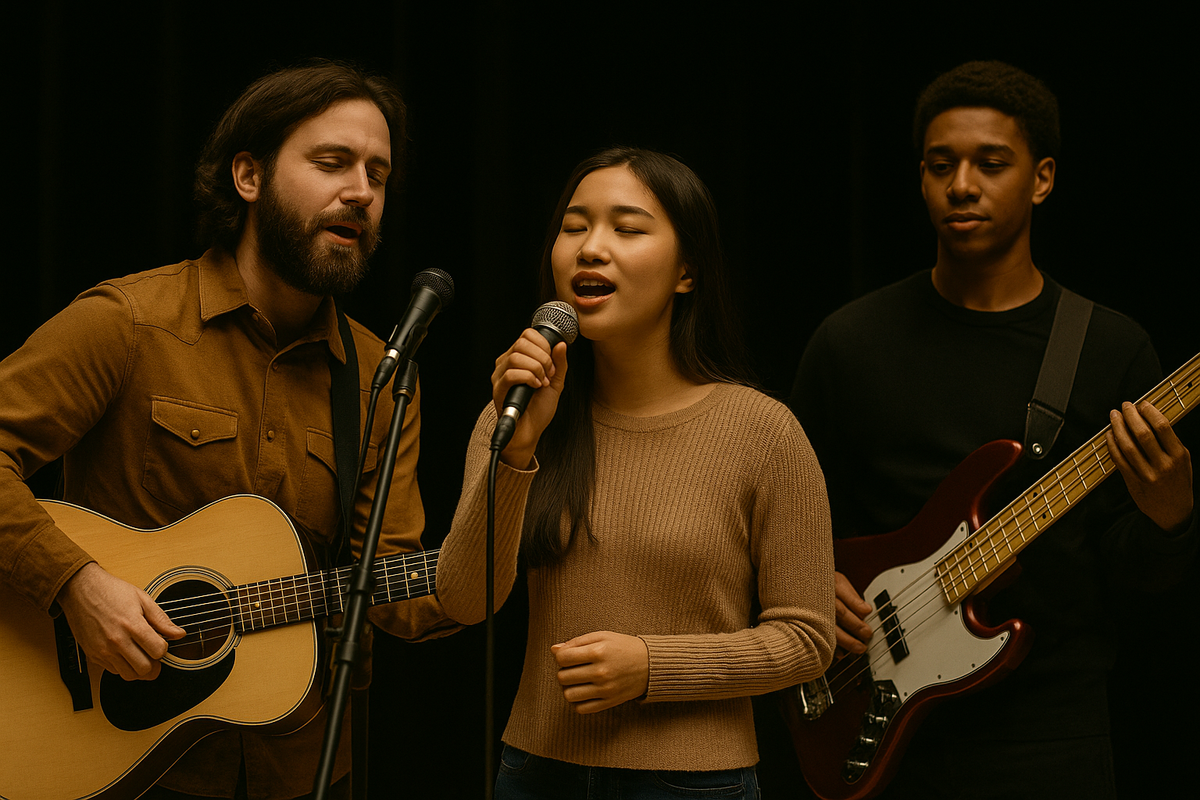
Words Meet Music
Prosody & Rhythm
Prosody is the invisible art that separates a lyric from a poem. It is the alignment of syllable stress with melodic emphasis, the matching of word rhythm to musical rhythm, and the technique that makes lyrics feel as though they could only exist in their musical setting. Mastering prosody is what separates amateur from professional lyric writing.
- Syllable stress patterns: understanding which syllables naturally emphasize and aligning them with melodic accents
- Internal rhyme and near-rhyme: creating sonic texture within the line, not just at the end
- Consonance and assonance: the subtle sound repetitions that give lyrics musical quality
- Rhythmic writing: varying sentence length, phrasing, and breath to match the groove
- Singability testing: practical techniques for ensuring lyrics feel natural in the mouth of a singer
When prosody is right, the words and melody feel inseparable. When it is wrong, even beautiful words fight against the music.
Versatility
Genre-Specific Writing
Every genre has its own lyric traditions, conventions, and audiences. A great lyricist understands these traditions not as constraints but as creative frameworks that sharpen the writing. This module trains you to write effectively across multiple genres while developing your own distinctive voice within each one.
- Pop hooks: economy of language, repetition strategies, and universal emotional triggers
- Country storytelling: narrative specificity, conversational tone, and the art of the payoff line
- Hip-hop wordplay: multisyllabic rhyme, flow patterns, double entendre, and rhythmic density
- Folk tradition: the ballad form, social commentary, and the oral storytelling legacy
- R&B intimacy: vulnerability, sensuality, and the language of emotional connection
Versatility does not mean losing your voice. It means discovering how your voice sounds in different rooms.

Curriculum Overview
What You'll Learn
Six comprehensive modules covering every dimension of the lyricist's craft, from poetic technique to the workshop revision process that professional lyricists rely on.
Poetic Techniques for Lyrics
- Concrete imagery and sensory detail
- Extended metaphor and symbolism
- Figurative language in compressed forms
- The lyricist's relationship to poetry
Narrative Songwriting
- Character creation and voice
- Story arc across verses and chorus
- Point of view selection and shifts
- Dramatic tension and resolution in lyric
Prosody & Musical Fit
- Syllable stress and melodic alignment
- Singability and vocal phrasing
- Matching emotional tone to musical tone
- Writing for different tempos and feels
Rhyme & Meter Mastery
- Perfect, near, slant, and internal rhyme
- Rhyme scheme design and variation
- Meter and rhythmic patterning in lyrics
- Using sonic devices: alliteration, assonance
Genre-Specific Approaches
- Pop lyric conventions and hook craft
- Country narrative and payoff structure
- Hip-hop flow and multisyllabic rhyme
- Folk, R&B, and indie lyric traditions
Revision & Workshop Process
- The workshop model for lyricists
- Giving and receiving productive critique
- Revision strategies: cutting, reshaping, rewriting
- From draft to final: the professional editing process
"A word after a word after a word is power."
-- Margaret AtwoodYour Achievement
Capstone Portfolio & Credentials
Complete a professional lyric portfolio that demonstrates mastery across poetic technique, narrative craft, prosody, and multi-genre versatility.
Capstone Requirements
By the end of the program, you will have assembled a professional lyric portfolio that showcases your range, depth, and distinctive voice as a lyricist. This portfolio serves as both a creative achievement and a professional calling card.
- 12-lyric portfolio demonstrating range across imagery, narrative, and prosody techniques
- Narrative song cycle: a connected sequence of 3-4 lyrics telling a unified story
- Genre-crossing exercise set with lyrics written in at least three distinct genre conventions
- Workshop critique portfolio documenting your growth through peer feedback and revision
- Published lyric analysis: a critical essay analyzing the craft of a master lyricist of your choice
Digital Credentials
Master Lyricist
Official Global Conservatory Lyric Writing & Storytelling Certificate
Specialty Badges Earned
Your Journey
Program Timeline
A carefully structured twelve-week progression from poetic foundations to professional-level lyric writing and portfolio completion.
Poetic Foundations
Weeks 1 - 3
Build your foundation in imagery, metaphor, and sensory writing. Study the relationship between poetry and lyric craft. Write your first portfolio lyrics using structured exercises focused on concrete detail and showing versus telling.
Narrative & Voice
Weeks 4 - 6
Dive deep into narrative songwriting: character, point of view, story arc, and dramatic tension. Begin your narrative song cycle. Participate in your first workshop critique sessions and learn the revision process.
Prosody & Genre
Weeks 7 - 9
Study prosody, rhyme schemes, and the musical relationship between words and melody. Explore genre-specific conventions across pop, country, hip-hop, folk, and R&B. Complete your genre-crossing exercise set.
Portfolio & Mastery
Weeks 10 - 12
Finalize your 12-lyric portfolio and narrative song cycle. Complete your published lyric analysis essay. Present your best work in the virtual lyricist showcase. Receive final mentorship feedback and earn your credentials.
Student Voices
What Lyricists Say
Hear from writers who have transformed their lyric craft through this intensive program.
"I thought I knew how to write lyrics until this program showed me what I was missing. The prosody module alone was a revelation. I had been fighting my melodies for years without realizing it. Now my words and music work together instead of against each other."
"The narrative song cycle project changed the way I think about lyrics entirely. I went from writing individual songs to thinking about how lyrics can build a world across multiple pieces. My writing has so much more depth and intentionality now."
"The workshop critique process was exactly what I needed. I had always written alone and never had honest, skilled feedback on my lyrics. The cohort became my creative community, and the revision strategies I learned here have become part of my permanent writing practice."
Common Questions
Frequently Asked
Your Weekly Learning Rhythm
A structured cadence designed to build mastery through consistent practice, expert feedback, and peer collaboration.
Start Your Journey
Enrollment Inquiry
Complete this form to express your interest in the Lyric Writing & Storytelling Certificate. Our admissions team will respond within 24-48 hours.
Your Words Matter.
Transform your lyric writing from instinct to craft. With expert mentorship, a rigorous workshop community, and a structured path from poetic technique to genre versatility, the Lyric Writing & Storytelling Certificate gives you the tools to write words that endure.

About This Credential
The Global Conservatory issues professional certificates and credentials. TGC certificates are non-degree credentials designed to validate specialized skills and knowledge. They do not represent academic degrees, college credits, or accredited diplomas. For questions about credential recognition, visit our credential verification page.
Start Your Journey
Ready to Enroll?
Submit your interest and our admissions team will contact you with program details, pricing, and next steps.
No commitment required. Financial aid available for qualifying students.