
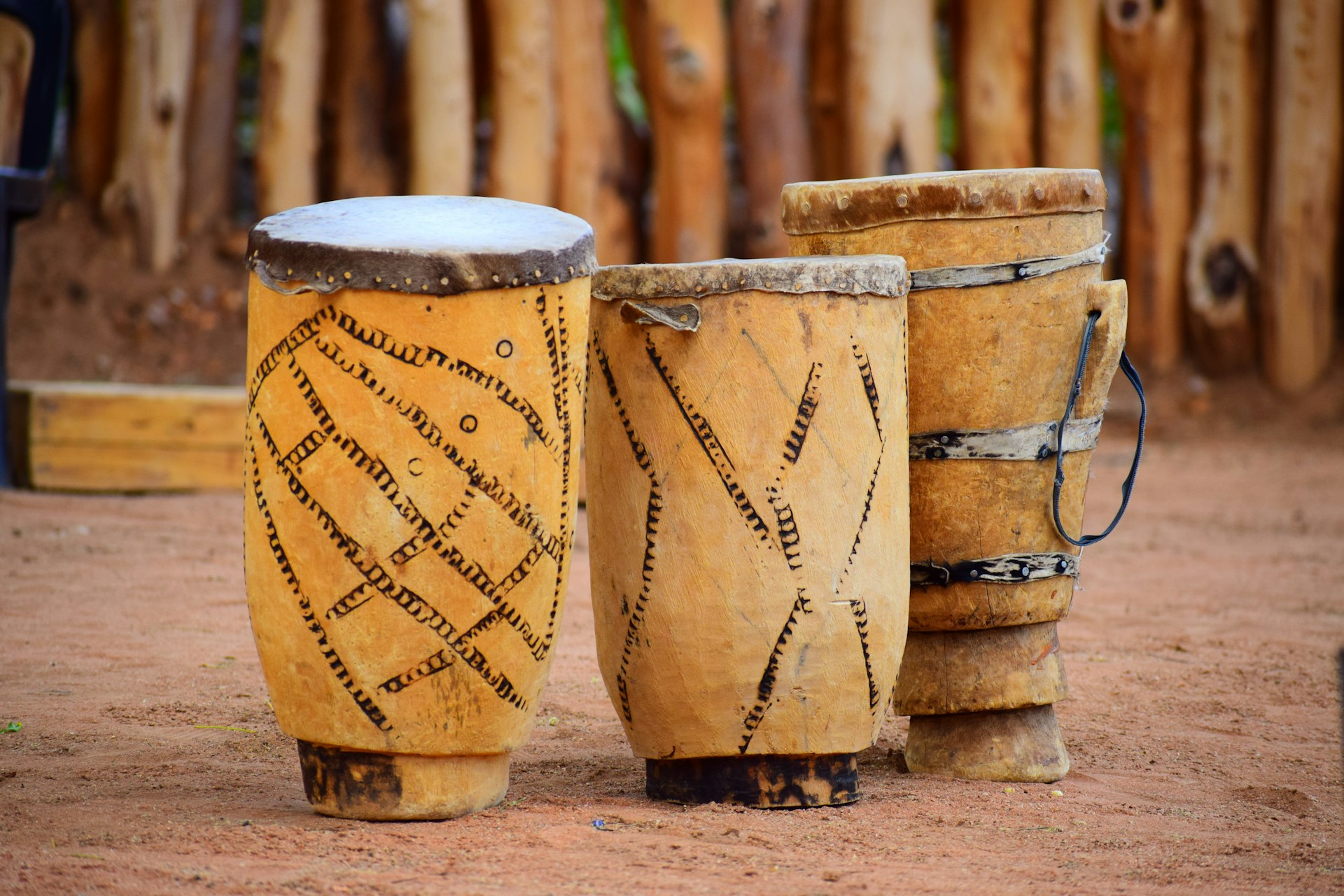
African Music& Rhythms
World Music Track · Foundation Program
Immerse yourself in the polyrhythmic traditions, vocal artistry, and communal music-making that define the African continent's extraordinary musical heritage.
The Certificate in African Music & Rhythms at The Global Conservatory is the definitive study of Africa's vast musical landscape — from the djembe circles of West Africa to the choral traditions of Southern Africa, from Afrobeat's revolutionary grooves to the desert blues of the Sahel. This is not a survey course. It is a deep, practice-based immersion in the rhythmic, melodic, and social systems that have shaped global music for centuries.
You will learn by doing — playing, singing, and moving. Guided by master drummers, ethnomusicologists, and performing artists with deep roots in African musical traditions, you will develop both technical fluency and cultural understanding that transforms how you hear, create, and collaborate.
Our Approach
In Africa, music is never separate from life. It accompanies birth, death, harvest, and healing. We teach African music the way it is lived — as a communal practice inseparable from movement, voice, and social meaning.
Western music education often isolates rhythm from context. This program restores the connections — between drum and dance, between call and response, between the individual voice and the collective pulse. You will not merely study these traditions. You will participate in them.
Focus Areas
Three Core Disciplines
Every module builds toward deep understanding of African musical systems across three interconnected practice areas.
Drumming & Percussion
Master West African djembe and dunun techniques, explore polyrhythmic layering, and learn the language of the talking drum across multiple traditions.
Vocal & Choral Traditions
Study call-and-response singing, multi-part vocal harmony, praise singing, and the role of the griot in preserving oral history through song.
Cultural Context & Fusion
Understand how African rhythms shaped Afrobeat, Highlife, Soukous, and global genres from jazz to hip-hop, reggae to electronic dance music.
Core Tradition
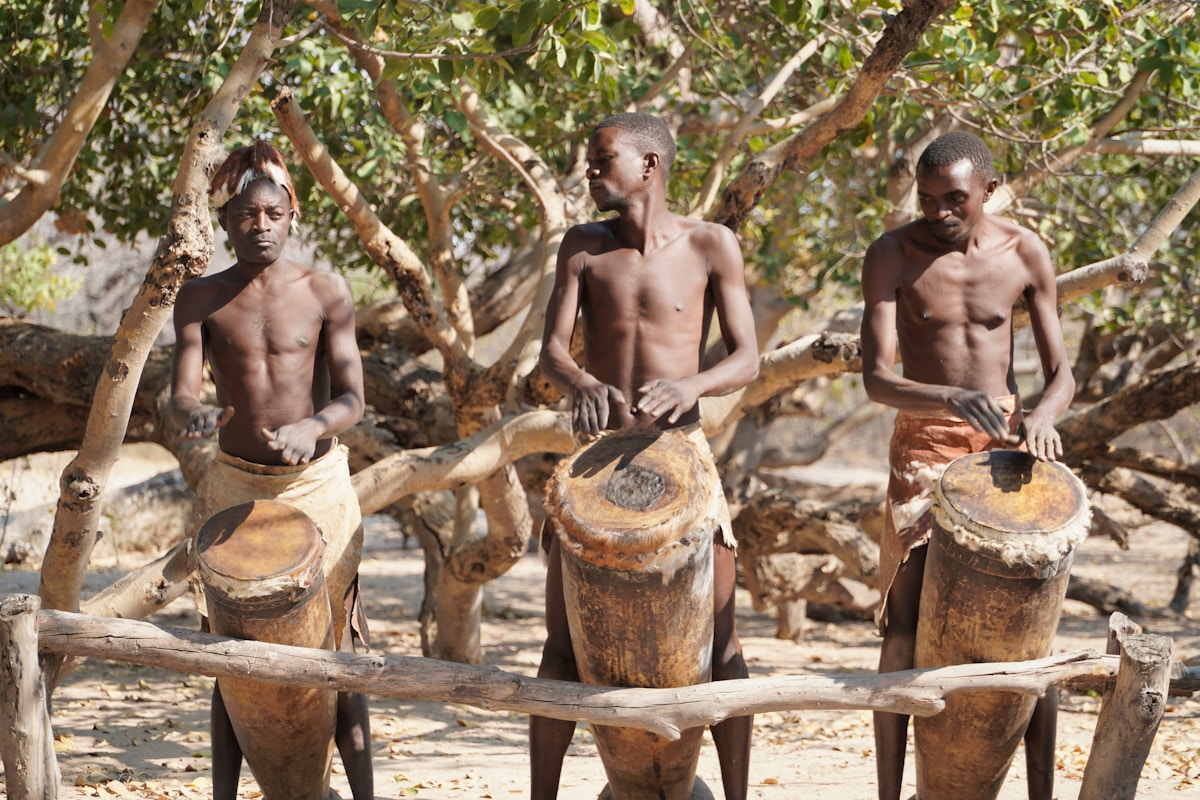
West African Drumming
The djembe and dunun ensemble is one of the most sophisticated rhythmic systems on Earth. You will learn the fundamental bass, tone, and slap techniques, then build toward complex polyrhythmic arrangements where multiple independent patterns interlock to create a single, living groove.
Every rhythm has a purpose — for celebration, for work, for spiritual ceremony. Understanding that purpose is as important as mastering the technique. You will study the social function of each rhythm alongside its physical execution.
- Djembe technique: bass, tone, slap, and muffled strokes
- Dunun ensemble roles: dununba, sangban, and kenkeni
- Polyrhythmic layering and interlocking patterns
- Signal calls, breaks, and ensemble communication
Performance Practice
Call-and-Response & Vocal Arts
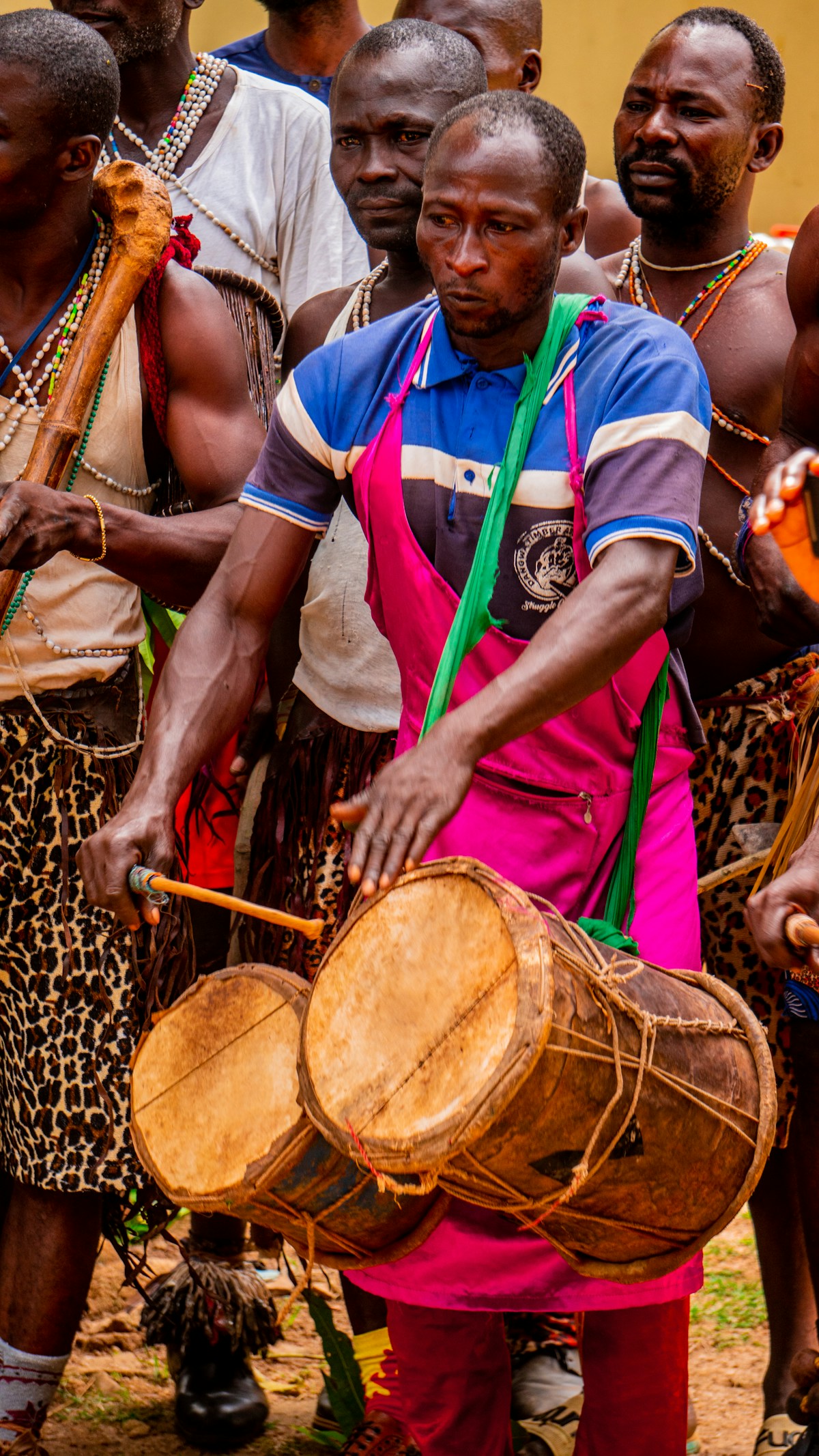
The call-and-response form is the foundation of African musical communication. It is not merely a structural device — it is a social contract between leader and community, a framework for improvisation, storytelling, and collective expression that has influenced everything from gospel to hip-hop.
You will develop your voice as an instrument of communal music-making, learning techniques from multiple African vocal traditions including South African isicathamiya, West African griot singing, and East African taarab-influenced vocal styles.
- Call-and-response structures across regional traditions
- Griot vocal techniques and praise-singing traditions
- Multi-part harmony in Southern African choral music
- Vocal percussion and beatboxing roots in African traditions
Inspired By Giants
The Artists Who Shaped African Music
These pioneering musicians brought African rhythms, melodies, and philosophies to the world stage. Their innovations are woven into every module of this certificate.
"Music is a weapon of the future."— Fela Kuti
Babatunde Olatunji
West African Drumming
Drums of Passion, introduced African drumming to Western audiences
Fela Kuti
Afrobeat
Created Afrobeat, fused Yoruba music with jazz and funk
Miriam Makeba
South African / World
Mama Africa, brought Xhosa and Zulu music to global prominence
Ali Farka Touré
Desert Blues
Malian guitar master, bridged African and American blues traditions
Youssou N'Dour
Mbalax / Pop
Senegalese superstar, modernized traditional Wolof griot music
Angelique Kidjo
Afropop / World
Multiple Grammy winner, fuses Beninese traditions with global pop
Hugh Masekela
Jazz / Afropop
South African trumpet legend, anti-apartheid musical activist
Salif Keita
Afropop / Manding
Golden Voice of Africa, modernized Malian Manding musical traditions
Instruments & Repertoire
Beyond the Drum: Melodic Instruments
African music encompasses far more than percussion. The kora, balafon, mbira, and countless stringed and wind instruments carry melodies, harmonies, and philosophical meaning. You will study the construction, tuning systems, and repertoire of instruments from across the continent.
From the 21-string kora of the Manding griots to the thumb piano (mbira) central to Shona spiritual practice, each instrument carries centuries of cultural knowledge encoded in its tuning, technique, and traditional repertoire.
- Kora technique and Manding griot repertoire
- Mbira patterns and Shona ceremonial music
- Balafon scales and West African xylophone traditions
- African string instruments: ngoni, nyatiti, and krar
Cultural Context
African Rhythms in Global Music
Every popular music genre on Earth carries African DNA. The rhythmic foundations of jazz, blues, rock, funk, hip-hop, reggae, samba, and electronic dance music all trace back to the African continent. This module maps those connections with scholarly rigor and musical practice.
You will study how the transatlantic slave trade dispersed African musical concepts across the Americas, how those concepts evolved in new contexts, and how contemporary African artists are reclaiming and redefining their global musical influence.
- Rhythmic DNA: tracing African patterns in jazz, funk, and hip-hop
- The Afrobeat revolution and its contemporary descendants
- Highlife, Soukous, and pan-African popular music
- Contemporary African electronic music and global fusion
Full Curriculum
What You'll Learn
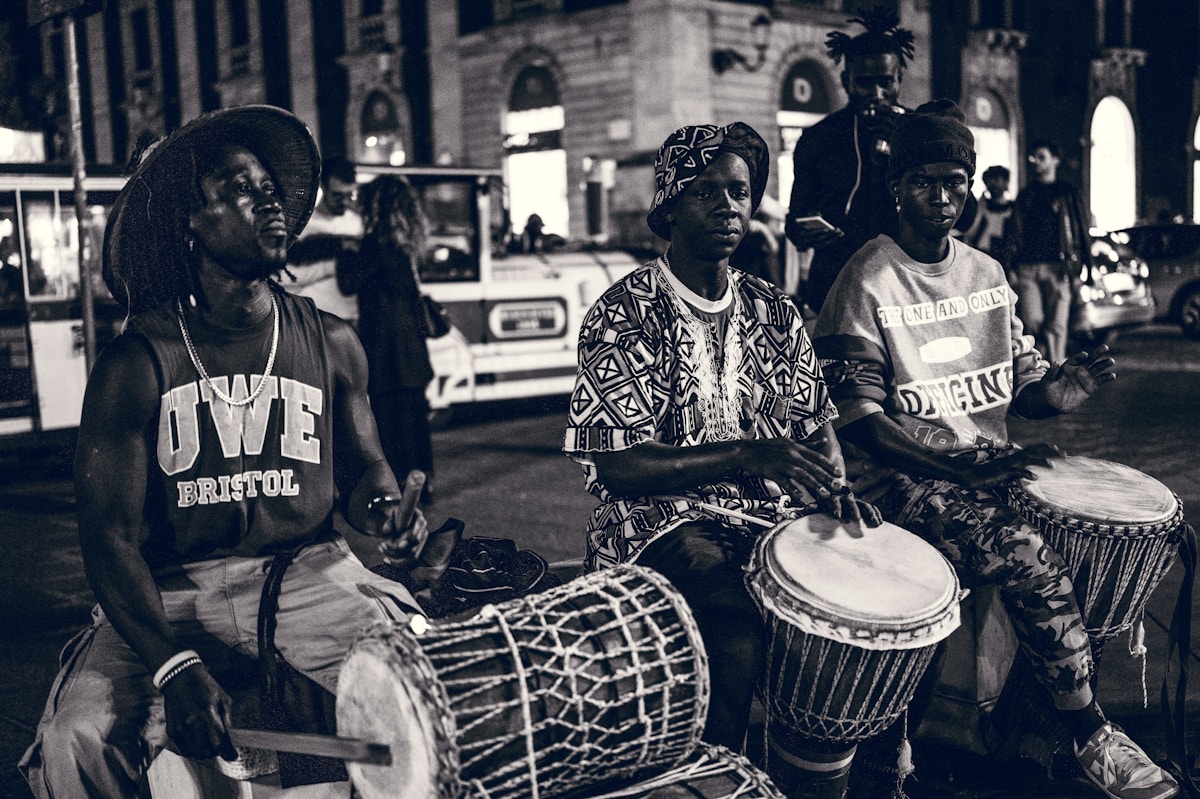
Six intensive modules covering the depth and breadth of African musical traditions — from foundational rhythms to contemporary global influence.
Foundations of African Rhythm
- Polyrhythm and cross-rhythm fundamentals
- Timeline patterns (bell patterns) across traditions
- Body percussion and dance-rhythm integration
- Oral syllable systems for rhythmic notation
West African Drumming
- Djembe and dunun ensemble technique
- Regional rhythms: Mandinka, Susu, Wolof
- Talking drum language and tonal communication
- Ensemble leadership and signal calling
Vocal & Choral Traditions
- Call-and-response singing across regions
- Griot vocal lineage and storytelling
- South African choral harmony (isicathamiya)
- Praise singing and ceremonial vocal forms
Melodic Instruments
- Kora repertoire and Manding music theory
- Mbira and Shona musical-spiritual practice
- Balafon and African xylophone traditions
- String and wind instruments across the continent
Contemporary African Music
- Afrobeat: Fela Kuti to Burna Boy
- Highlife, Juju, and Fuji music of Nigeria
- Soukous, Rumba, and Congolese guitar traditions
- Amapiano, Gqom, and African electronic genres
African Diaspora & Global Impact
- Rhythmic connections to jazz, blues, and funk
- African roots of Caribbean and Latin music
- Hip-hop, Afrobeats, and contemporary fusion
- Capstone: cross-cultural collaboration project
"The drum is the heartbeat of the community. When you learn its language, you learn to listen to the world."
— TGC FacultyYour Final Deliverable
Capstone Performance Portfolio
Your capstone is a multi-format portfolio demonstrating mastery of African musical traditions. You will prepare ensemble drumming performances, vocal arrangements, a research paper on a chosen tradition, and a creative fusion project that bridges African and contemporary musical practices.
- Ensemble drumming performance (video documented)
- Call-and-response vocal arrangement (original or traditional)
- Research paper on a specific African musical tradition
- Cross-cultural fusion composition or arrangement
- Peer and faculty review presentation
Certificate & Badges Awarded
Certificate of Completion
African Music & Rhythms — The Global Conservatory
Digital badges in:
Your 6 Months
The Program Experience
A structured journey from foundational rhythm to portfolio-ready mastery across four progressive phases.
Rhythmic Foundations
Build core polyrhythmic skills, learn body percussion, and master fundamental djembe and dunun techniques. Months 1–2.
Vocal & Melodic Arts
Develop call-and-response singing, explore griot traditions, and study kora, mbira, and balafon repertoire. Months 2–3.
Regional Deep Dives
Study specific traditions in depth: Manding, Yoruba, Shona, Zulu. Explore Afrobeat, Highlife, and Soukous. Months 4–5.
Capstone & Presentation
Complete your performance portfolio, fusion project, and research paper. Present to faculty and peers. Month 6.
Student Voices
What Graduates Say
Real feedback from musicians who completed the African Music & Rhythms certificate.
"This program completely changed how I understand rhythm. Learning polyrhythmic concepts from master drummers gave me tools I use in every rehearsal and session now."
"I came in as a jazz drummer wanting to deepen my African music knowledge. The cultural context modules were just as transformative as the drumming practice itself."
"The faculty brought living tradition into every session. This was not academic distance — it was participatory, embodied, and deeply respectful of the source cultures."
Questions
Frequently Asked Questions
Apply Now
Request Information
Ready to immerse yourself in African musical traditions? Complete this form and our admissions team will connect with you to discuss the program, assess fit, and answer your questions.
Feel the Rhythm. Join the Circle.
The heartbeat of Africa has shaped every genre of popular music on Earth. Join The Global Conservatory's African Music & Rhythms certificate and connect with the traditions that move the world.
Ready to Begin Your Journey?
Take the first step toward your performing arts education with The Global Conservatory.
For Institutions Bring TGC programs to your students — explore partnership tiers ›